Most students remember TACE as chemotherapy injection.
The real concept is more precise: HCC is an arterial tumor, so an interventional radiologist can enter the hepatic arterial tree, deliver chemotherapy into the tumor-feeding artery, then embolize that artery to cause tumor ischemia.
Transarterial chemoembolization is one of the most important locoregional therapies used in hepatocellular carcinoma.

Learning Objectives
- Define TACE
- Explain why TACE works in HCC
- Describe the basic procedure
- Identify indications and contraindications
- Understand bridge therapy and downstaging
- Compare TACE and TARE
- Recognize response assessment and complications
What Is TACE?
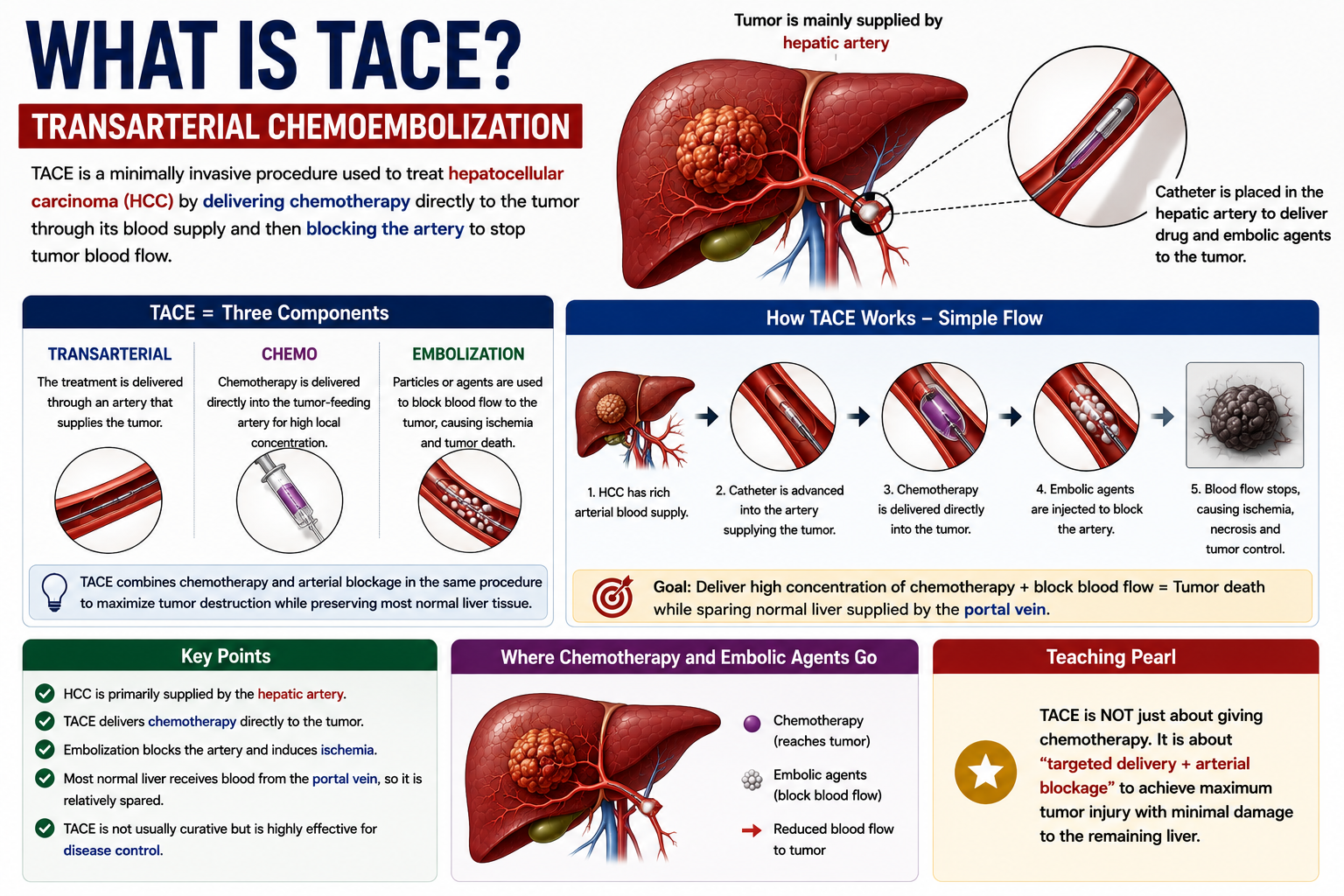
TACE stands for transarterial chemoembolization.
| Part | Meaning |
|---|---|
| Transarterial | Through an artery |
| Chemo | Chemotherapy delivered locally |
| Embolization | Blocking blood flow to reduce tumor perfusion |
TACE combines chemotherapy and arterial blockage in the same procedure.
Why TACE Works in HCC
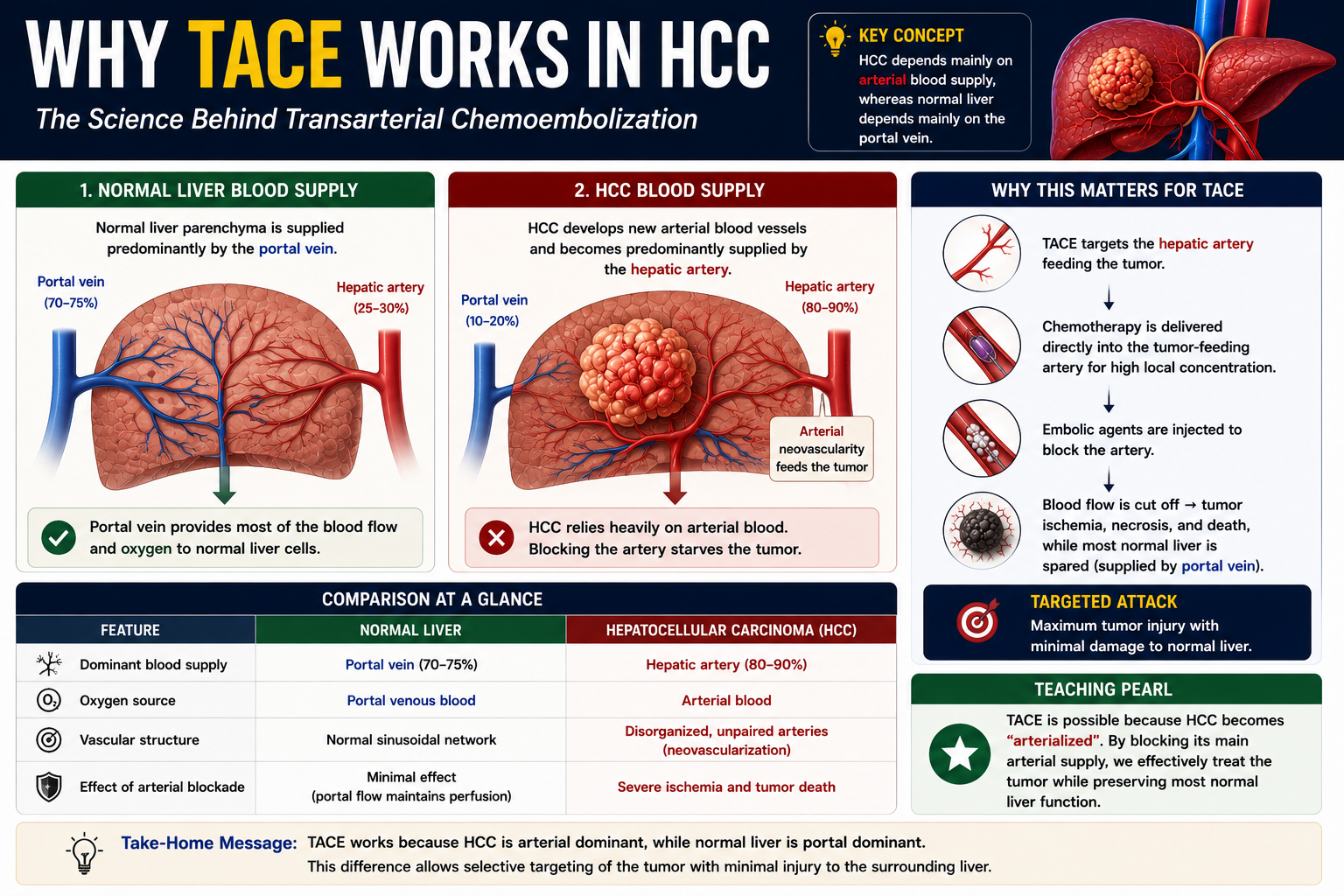
Normal liver tissue is portal-vein dominant, while HCC becomes arterial dominant as abnormal tumor arteries develop. This vascular difference allows TACE for HCC to target tumor tissue more selectively than the surrounding liver.
This links directly to the blood-supply changes explained in Hepatocellular Carcinoma Explained.
TACE works because HCC depends much more on arterial blood supply than normal liver tissue.
How TACE Is Performed
A catheter is inserted into an artery, usually from the groin or wrist, and guided through the arterial system toward the liver. The operator selects the artery supplying the tumor.
The operator then injects chemotherapy and embolic material. The result is higher local drug concentration plus reduced blood flow to the tumor.

Conventional TACE vs Drug-Eluting Bead TACE
There are different technical approaches. The two broad concepts are conventional TACE and drug eluting bead TACE.
| Feature | Conventional TACE | DEB-TACE |
|---|---|---|
| Chemotherapy | Mixed with embolic agent | Loaded into beads |
| Drug release | Immediate | Gradual |
| Systemic exposure | Higher | Lower |
| Local delivery | Good | More sustained |
Both approaches aim to deliver chemotherapy while reducing tumor blood flow.

Who Should Receive TACE?
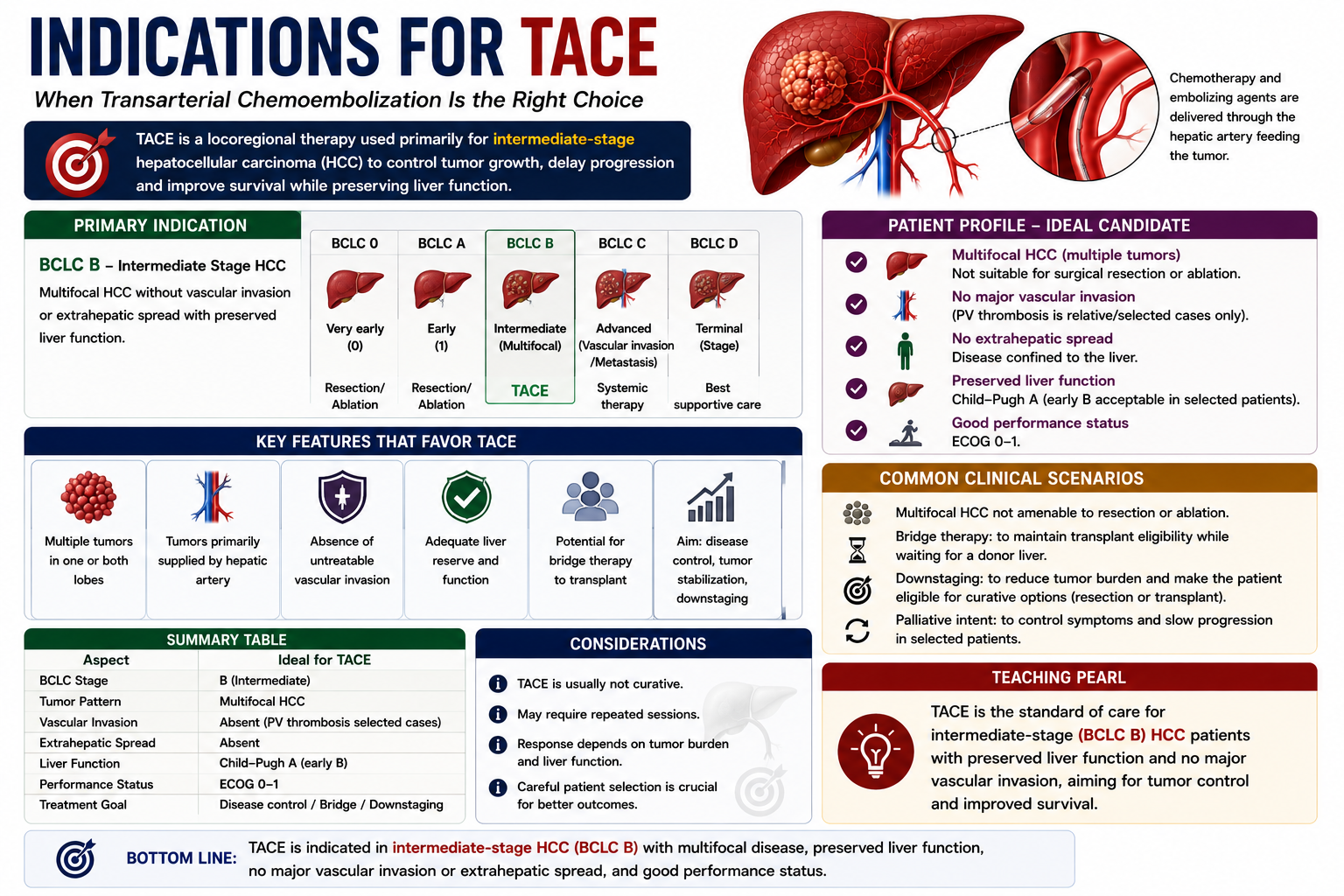
TACE is commonly used for intermediate stage HCC, especially multifocal liver-limited disease that is not suitable for resection or ablation but still has enough liver reserve to tolerate embolization.
| Suitable Feature | Why |
|---|---|
| Multifocal HCC | Difficult to resect or ablate completely |
| Preserved liver function | Better tolerance of ischemic injury |
| No extrahepatic spread | Local therapy remains useful |
| No severe liver failure | Lower risk of post-procedure decompensation |
Child-Pugh Class and TACE Suitability
Liver reserve is one of the most important determinants of whether TACE is safe. TACE blocks arterial flow to tumor tissue, but some surrounding liver injury can also occur.
| Child-Pugh Class | TACE Suitability |
|---|---|
| Child-Pugh A | Best candidates. Usually tolerate TACE better. |
| Selected Child-Pugh B | May be considered carefully depending on bilirubin, ascites, performance status and tumor burden. |
| Child-Pugh C | Usually unsuitable because the risk of liver failure is high. |
Review Child-Pugh Score Explained for the liver reserve framework.
TACE is not decided by tumor size alone. A small tumor in a failing liver may be more dangerous to treat with TACE than a larger tumor in a well-compensated liver.
When TACE Should Not Be Used
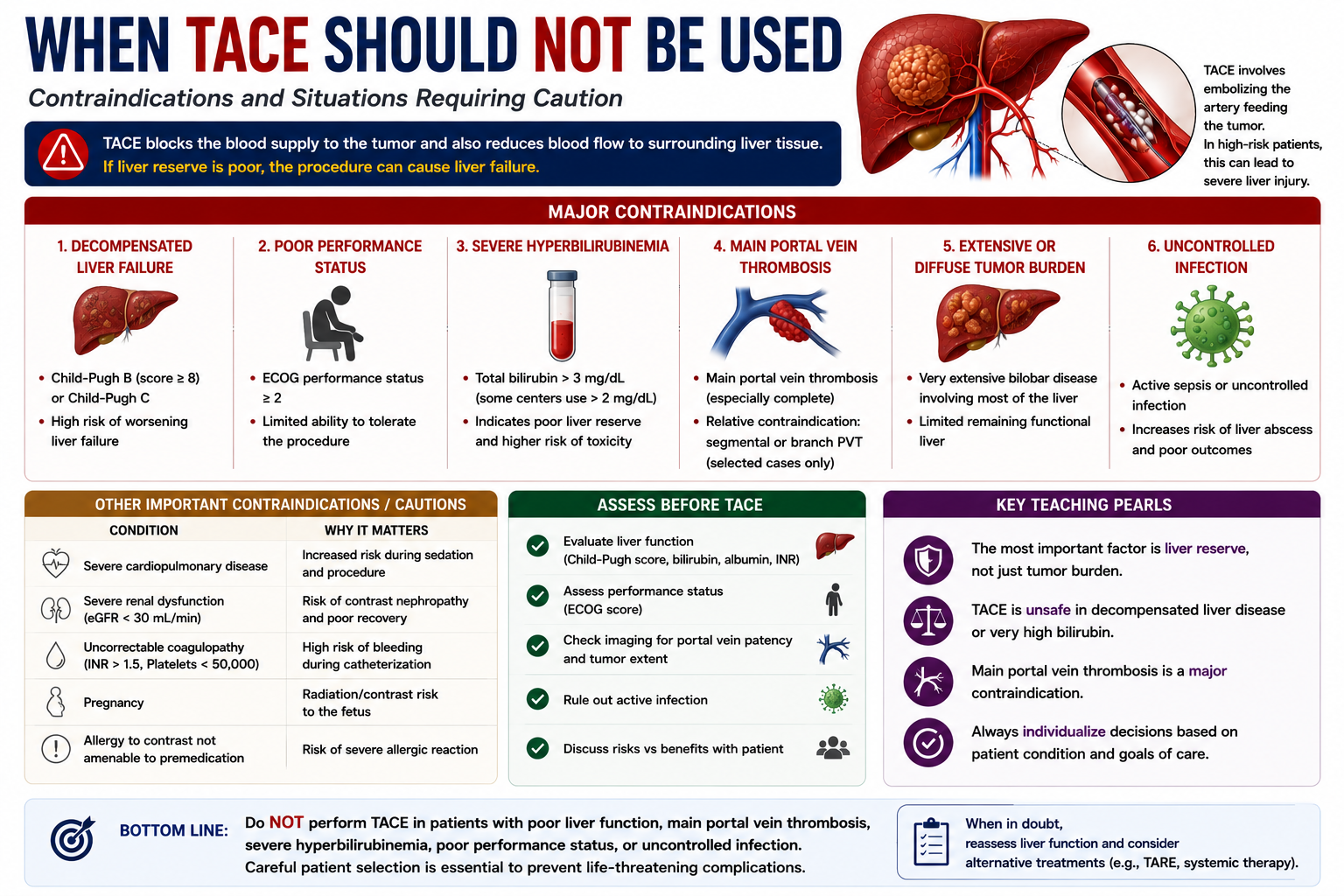
TACE can harm patients when the liver cannot tolerate further ischemic stress or when local therapy is unlikely to help.
- Severe liver failure
- Very poor performance status
- Extensive tumor burden
- Severe bilirubin elevation
- Uncontrolled infection
- Major vascular invasion or extrahepatic spread in many treatment frameworks
The liver must survive the procedure. Liver reserve is as important as tumor burden.
TACE as Bridge Therapy
Many patients wait months for transplantation. During that period, an HCC tumor may grow and push the patient outside transplant criteria.
Bridge therapy liver transplant means treatment that maintains transplant eligibility while a patient waits for a donor liver. TACE can help prevent progression and keep the tumor within criteria.
For the transplant pathway, see Liver Transplantation Explained.
Bridge therapy keeps a patient within transplant criteria while waiting for a donor liver.

Downstaging with TACE
Some patients initially exceed transplant criteria. TACE may reduce tumor burden enough to bring the patient into an acceptable transplant pathway.
Downstaging hepatocellular carcinoma means reducing tumor burden to create eligibility for a treatment such as liver transplantation.
Bridge therapy maintains eligibility. Downstaging creates eligibility.

TACE vs TARE
TACE vs TARE is a high-yield comparison because both are catheter-based liver-directed therapies, but their main mechanisms differ.
| Feature | TACE | TARE |
|---|---|---|
| Main therapy | Chemotherapy | Radiation |
| Mechanism | Chemo + embolization | Y90 microspheres |
| Ischemia | Major component | Less important |
| Radiation | No | Yes |

Response Assessment After TACE
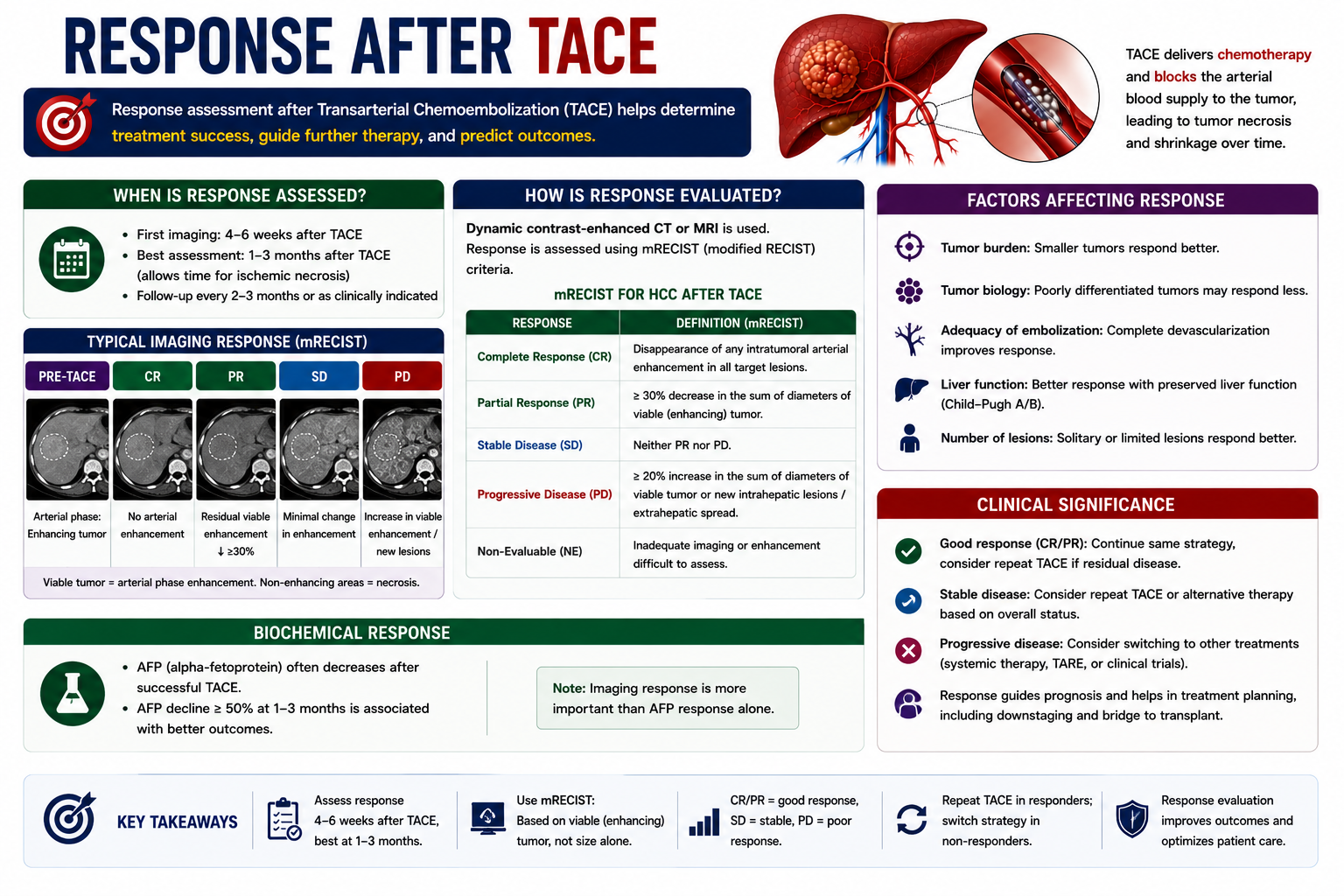
Students often think smaller tumor equals success. After locoregional HCC therapy, that is not always true. Viable tumor is enhancing tumor.
mRECIST Overview
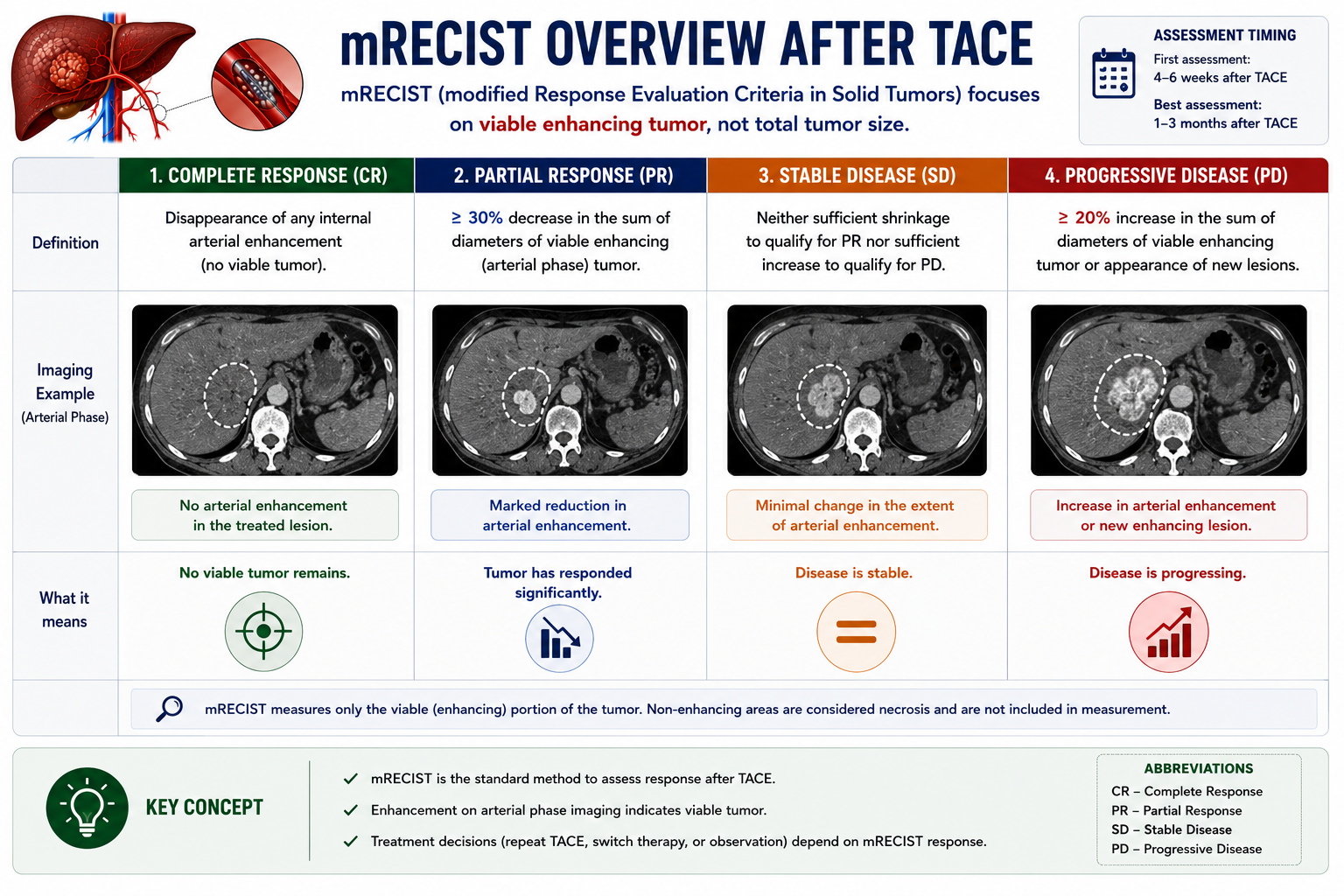
mRECIST means modified Response Evaluation Criteria in Solid Tumors. In HCC after TACE, it focuses on the viable enhancing part of the tumor rather than total tumor size alone.
| Response | Meaning After TACE |
|---|---|
| Complete Response (CR) | No arterial enhancement remains in the treated tumor. |
| Partial Response (PR) | At least 30% reduction in the sum of diameters of viable enhancing tumor. |
| Stable Disease (SD) | Neither sufficient reduction for PR nor sufficient increase for progression. |
| Progressive Disease (PD) | At least 20% increase in viable enhancing tumor or appearance of new lesions. |
mRECIST measures viable enhancing tumor. A non-enhancing treated mass may still be visible, but it may represent necrotic tumor rather than active cancer.
Response assessment after TACE focuses on enhancement, not size alone. A tumor may remain visible on imaging but become largely nonviable if arterial enhancement disappears.
Enhancement matters more than size alone.
Repeat TACE
Many patients need more than one TACE session. The decision depends on imaging response, liver function and whether viable tumor remains.
Repeat TACE is most logical when there is residual arterial enhancement that can still be targeted and the patient has enough liver reserve to tolerate another procedure.
Repeated TACE can harm the liver. If bilirubin rises, ascites worsens, performance status declines or tumors progress despite treatment, the team should reassess rather than automatically repeating TACE.
Complications of TACE
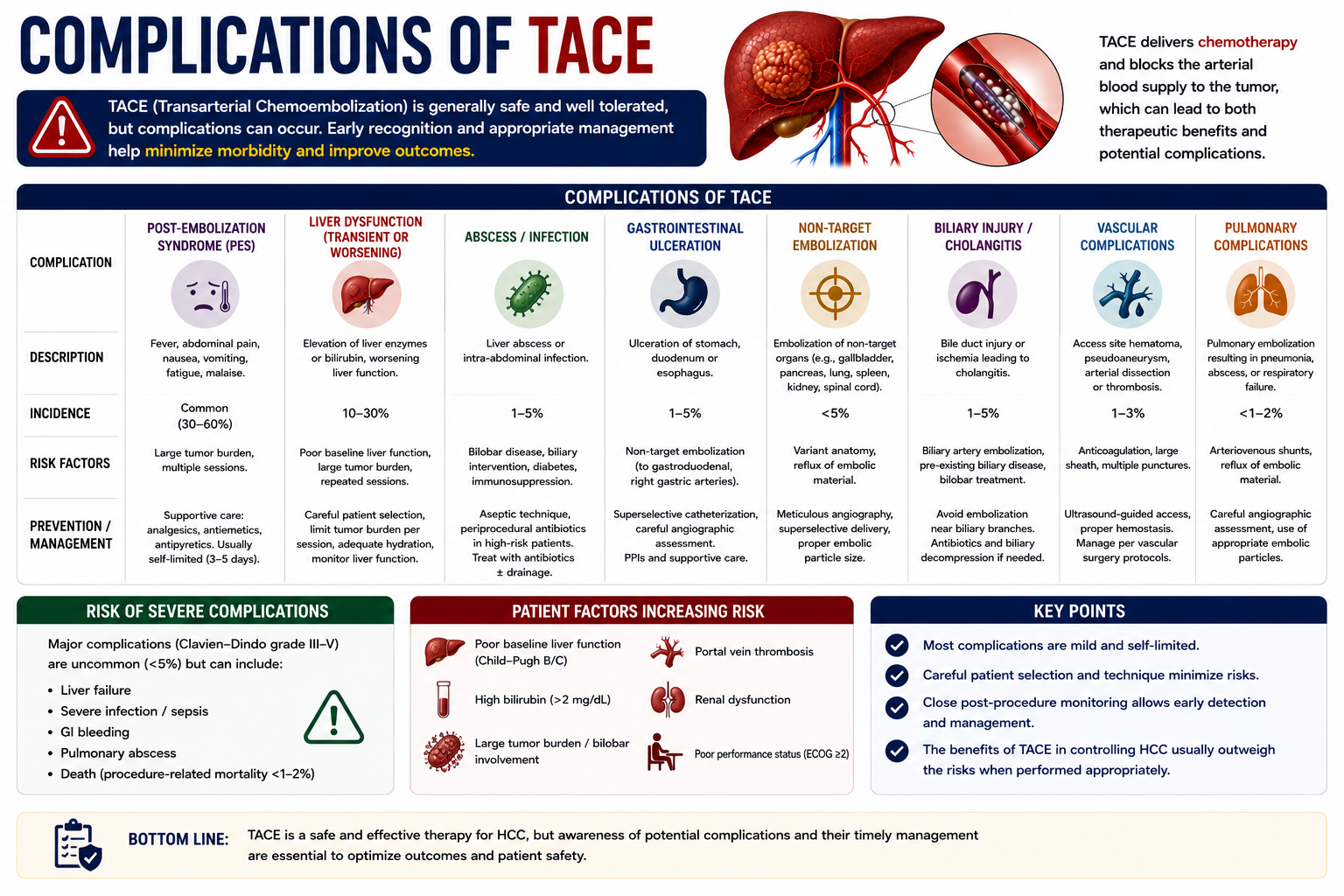
TACE complications range from common transient symptoms to rare serious liver injury.
| Complication | Explanation |
|---|---|
| Pain | Ischemic injury and capsular irritation |
| Fever | Post-embolization syndrome |
| Nausea | Common transient effect |
| Elevated liver enzymes | Hepatic injury |
| Liver failure | Rare but serious, especially with poor reserve |
| Liver abscess | Uncommon but important |
Pain + fever + nausea after TACE is the classic post-embolization syndrome and is the commonest clinical reaction after the procedure.
Prognosis After TACE
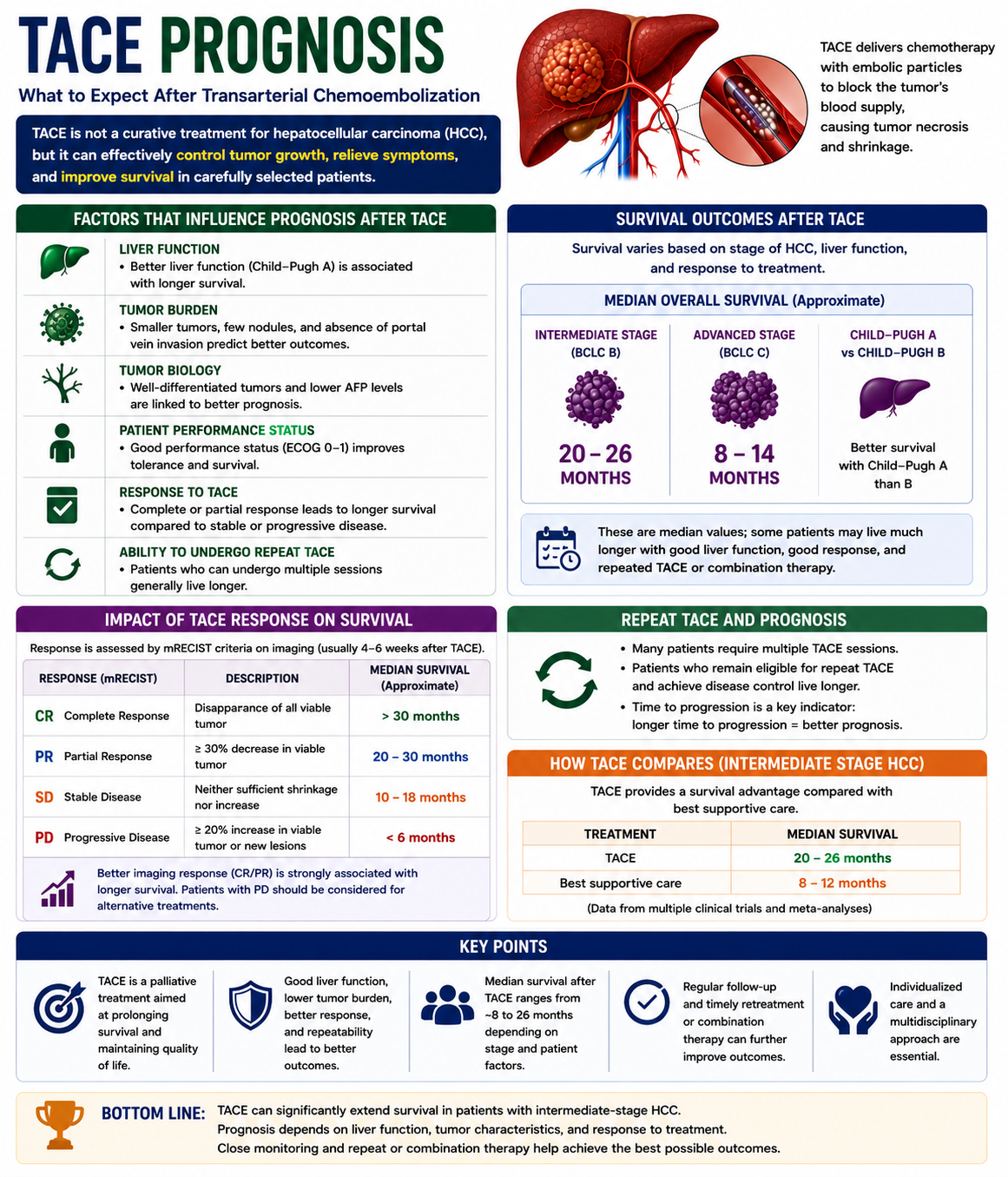
Outcome after TACE depends on tumor burden, liver function, response to therapy and whether repeat sessions are needed.
| Better Outcome | Worse Outcome |
|---|---|
| Good liver function | Poor liver reserve |
| Limited tumor burden | Extensive tumor burden |
| Good radiological response | Persistent arterial enhancement |
| Bridge/downstaging success | Progression despite therapy |
One-Minute Revision
If you remember one idea, remember this: TACE exploits the arterial dependence of HCC to deliver local chemotherapy and block tumor-feeding arteries.

High-Yield Exam Pearls
- TACE = transarterial chemoembolization.
- HCC is predominantly arterial.
- TACE targets tumor-feeding arteries.
- TACE is commonly used in BCLC B disease.
- Bridge therapy maintains transplant eligibility.
- Downstaging improves transplant eligibility.
- TACE is usually not curative.
- Post-embolization syndrome is common.
- Loss of enhancement indicates treatment response.
- TARE uses radiation rather than chemotherapy.
Frequently Asked Questions
Key Takeaways
- TACE combines local chemotherapy with embolization.
- It works because HCC is more arterial than normal liver tissue.
- Typical use is intermediate-stage, liver-limited HCC with preserved liver function.
- Child-Pugh class helps estimate whether liver reserve is strong enough for TACE.
- TACE can be used for disease control, bridge therapy and downstaging.
- mRECIST response assessment after TACE focuses on viable enhancing tumor.
- Repeat TACE depends on residual enhancing tumor and preserved liver function.
- Post-embolization syndrome is common; liver failure is uncommon but serious.
TACE is a catheter-based locoregional therapy for HCC that uses the tumor's arterial blood supply to deliver chemotherapy and embolization. It is most useful when tumor disease remains liver-limited and liver reserve is strong enough to tolerate treatment.
References
- Singal AG, Llovet JM, Yarchoan M, et al. AASLD Practice Guidance on prevention, diagnosis, and treatment of hepatocellular carcinoma. Hepatology. 2023;78(6):1922-1965.
- National Cancer Institute. Primary Liver Cancer Treatment (PDQ): Health Professional Version. Updated 2025.
- Llovet JM, Bruix J. Systematic review of randomized trials for unresectable hepatocellular carcinoma: chemoembolization improves survival. Hepatology. 2003;37(2):429-442.
- Reig M, Forner A, Rimola J, et al. BCLC strategy for prognosis prediction and treatment recommendation: The 2022 update. J Hepatol. 2022;76(3):681-693.
- Mazzaferro V, Regalia E, Doci R, et al. Liver transplantation for the treatment of small hepatocellular carcinomas in patients with cirrhosis. N Engl J Med. 1996;334(11):693-699.
This article is intended for medical education only. It does not constitute clinical advice. TACE decisions require specialist hepatology, interventional radiology, oncology, transplant and multidisciplinary tumor-board assessment.