Many students think TARE is simply TACE with radiation.
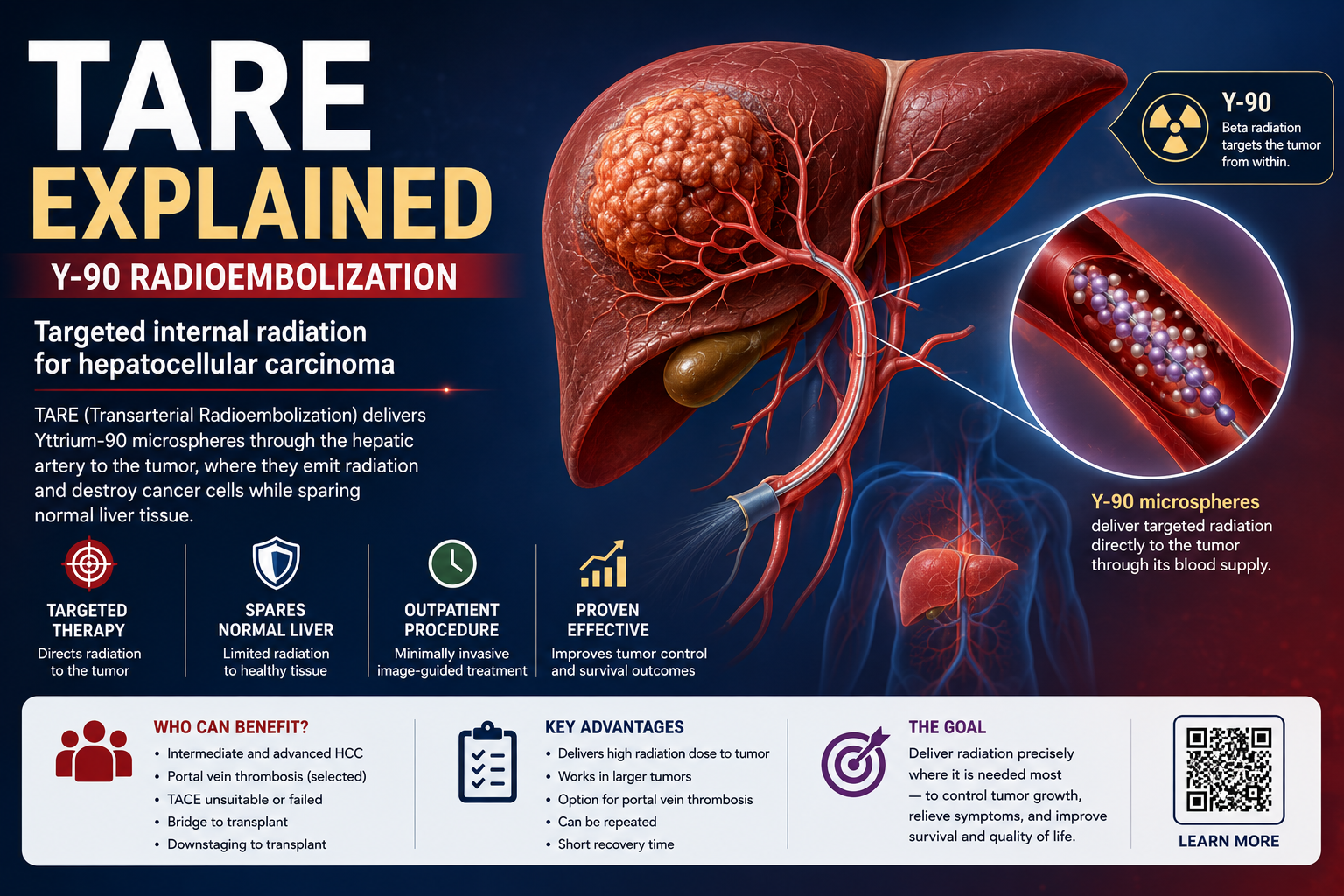
The better concept is targeted internal radiation: an interventional radiologist uses the arterial blood supply of HCC to deliver Y-90 microspheres into tumor vessels, where they emit local beta radiation.
Y-90 radioembolization is a locoregional therapy that delivers radiation directly into the arterial supply of liver tumors.
Learning Objectives
- Define TARE and Y-90 radioembolization
- Explain why TARE works in HCC
- Describe mapping angiogram and treatment steps
- Recognize indications and contraindications
- Understand radiation segmentectomy
- Understand bridge therapy and downstaging
- Compare TARE and TACE
- Recognize response patterns and complications
What Is TARE?
TARE stands for transarterial radioembolization.
| Part | Meaning |
|---|---|
| Transarterial | Through an artery |
| Radio | Radiation delivered to tumor |
| Embolization | Microspheres lodge in tumor vessels |
Unlike TACE, the main treatment effect comes from radiation rather than ischemia.

Why TARE Works in HCC
Normal liver is portal-vein dominant, but HCC becomes arterial dominant. TARE for HCC uses that vascular difference to deliver radiation-loaded microspheres more selectively into tumor tissue.
This directly connects to Blood Supply Changes in HCC.
TARE exploits the arterial blood supply of HCC in the same way as TACE, but the main payload is radiation.

How TARE Is Performed
TARE usually involves two procedures: a mapping angiogram followed by Y-90 treatment.

Step 1: Mapping Angiogram
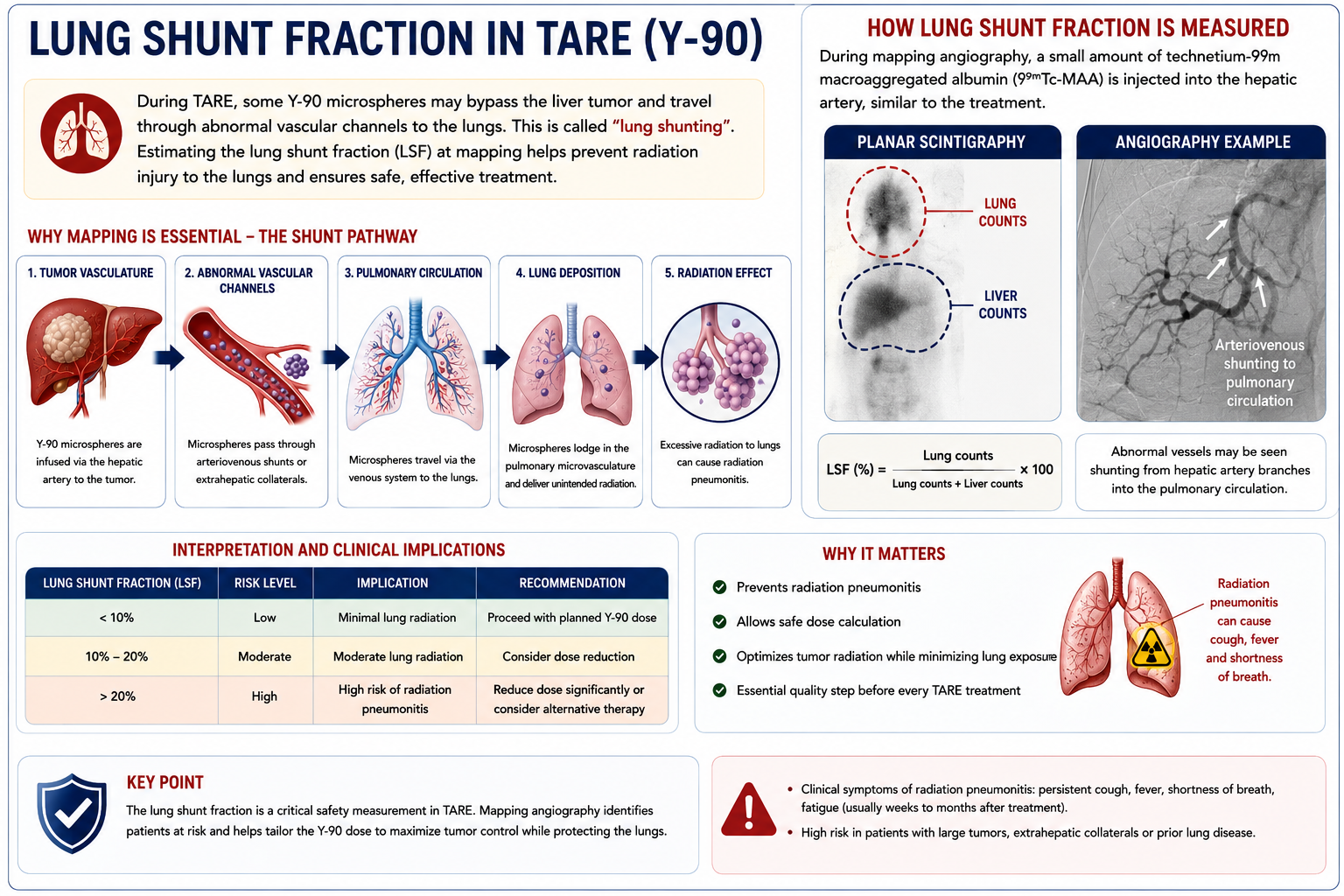
Mapping defines arterial anatomy, identifies non-target vessels and estimates lung shunt fraction. This is essential before treatment because microspheres must reach the tumor while avoiding organs such as the stomach, duodenum and lungs.
Lung Shunt Fraction
Some tumors contain abnormal vascular channels that allow microspheres to bypass the liver and reach the lungs.
The mapping angiogram estimates the lung shunt fraction before treatment. Excessive lung shunting increases the risk of radiation injury to the lungs and may make TARE unsafe.
High lung shunt fractions may require dose reduction or cancellation of treatment.
Step 2: Y-90 Treatment
Mapping is essential before treatment.
What Is Y-90?
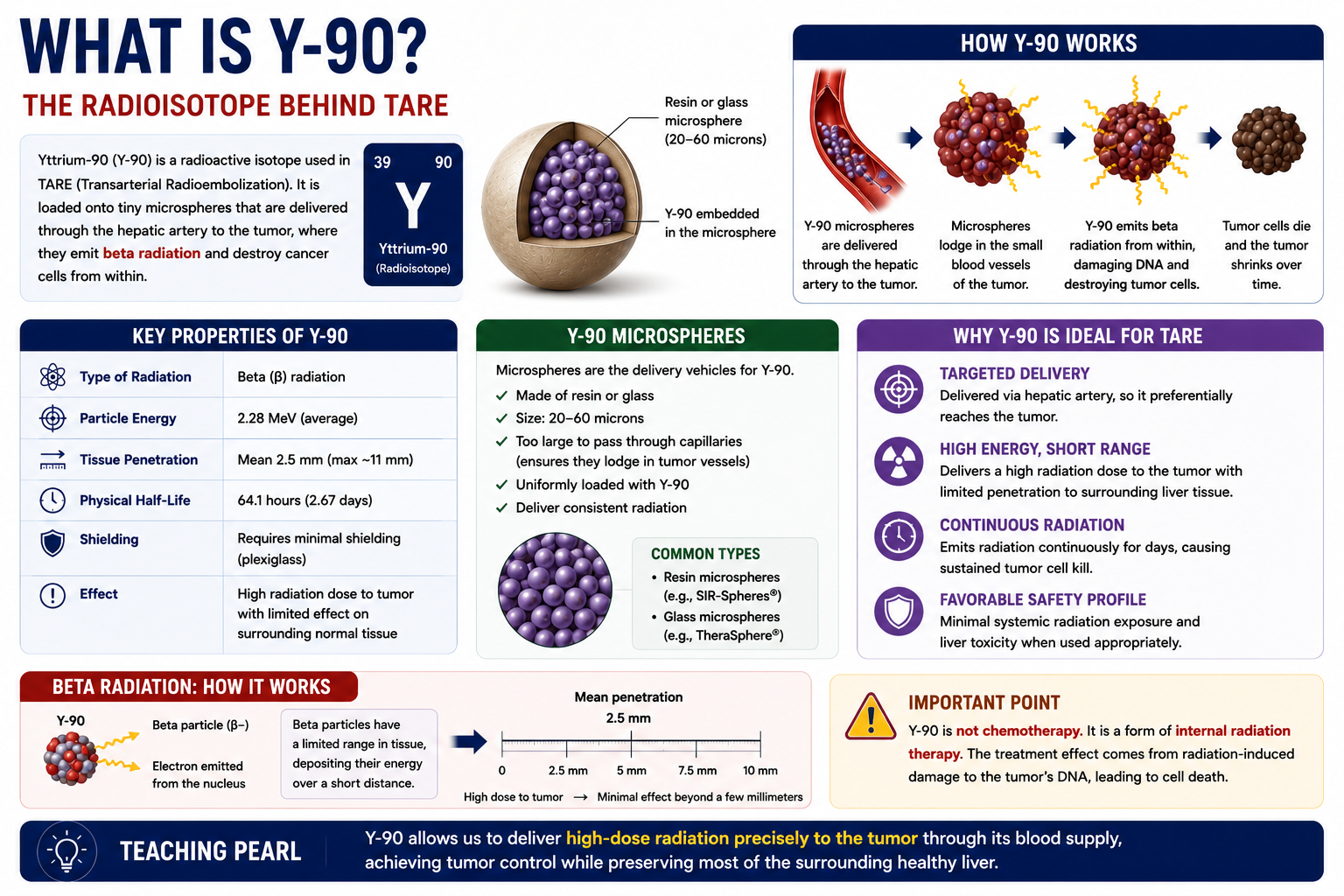
Yttrium-90 is a radioactive isotope that emits beta radiation. In TARE, Y-90 is carried by tiny microspheres that lodge in tumor vessels and irradiate nearby tumor tissue.
| Feature | Description |
|---|---|
| Radiation type | Beta |
| Tissue penetration | Limited |
| Delivery | Microspheres |
| Goal | Tumor destruction |
The short radiation range helps protect surrounding tissue.
Who Should Receive TARE?
Radioembolization liver cancer treatment is considered in selected HCC patients when liver-directed radiation is useful and liver reserve is adequate.
- Large HCC
- Portal vein thrombosis TARE in selected patients
- TACE unsuitable
- TACE failure
- Bridge therapy HCC
- Downstaging HCC
| Feature | Why |
|---|---|
| Portal vein thrombosis | Less dependent on embolic ischemia than TACE |
| Large tumors | Effective radiation delivery can be useful |
| Bridge therapy | Maintains transplant eligibility |
| Downstaging | Reduces tumor burden |

Where Does TARE Fit in BCLC Staging?
TARE may be used across several BCLC stages depending on tumor characteristics, liver function and treatment goals.
| BCLC Stage | Potential Role of TARE |
|---|---|
| Early Stage (BCLC A) | Radiation segmentectomy for selected localized tumors. |
| Intermediate Stage (BCLC B) | Common indication for liver-directed therapy. |
| Advanced Stage (BCLC C) | Selected patients, including some with portal vein thrombosis. |
| Terminal Stage (BCLC D) | Usually not appropriate. |
TARE is most commonly used in intermediate-stage disease but can also play a role in carefully selected early-stage and advanced-stage patients.
Review the full staging system in BCLC Staging Overview.
When TARE Should Not Be Used
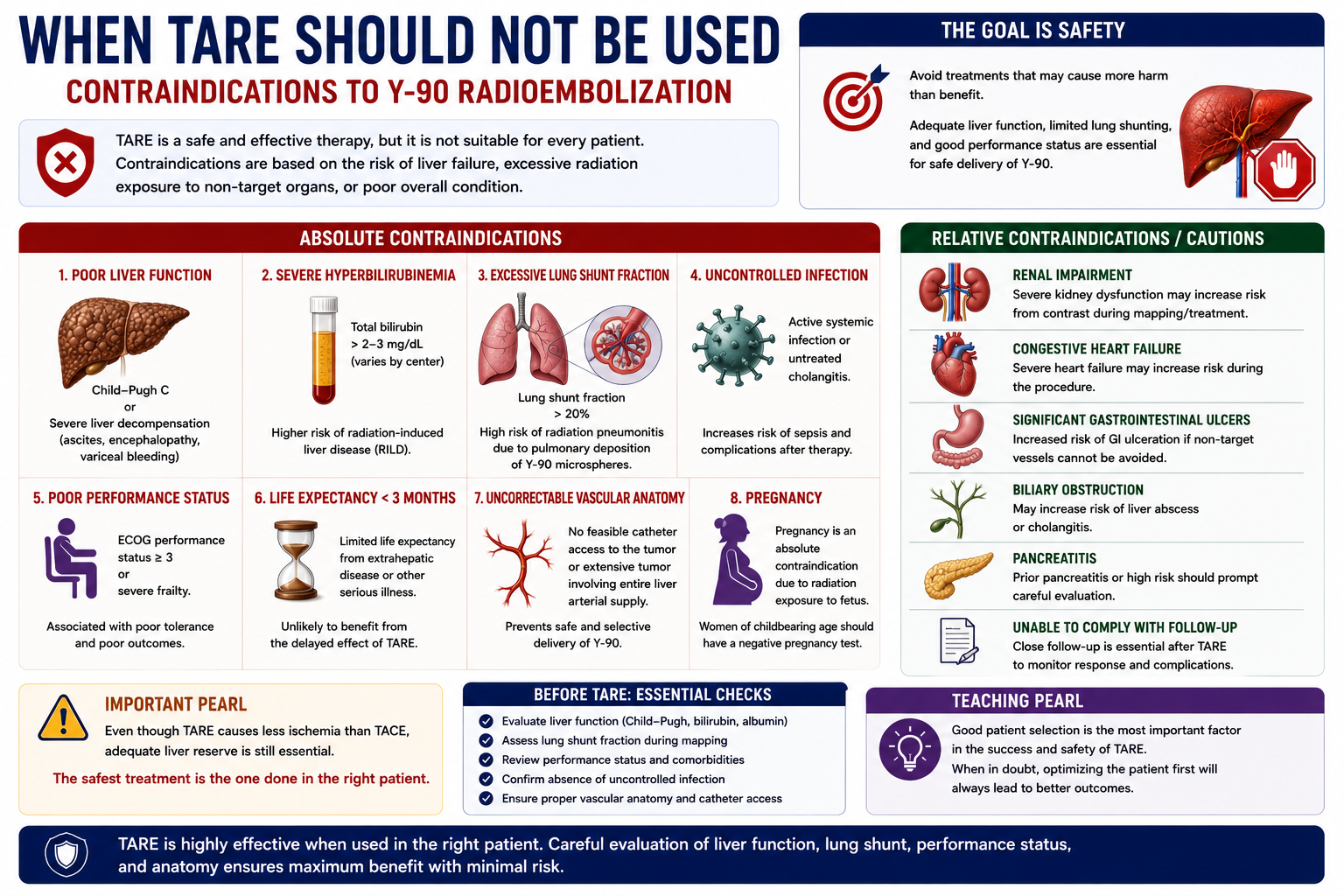
TARE is less embolic than TACE, but it can still injure liver tissue and non-target organs. Careful selection is essential.
- Poor liver reserve
- Severe bilirubin elevation
- Excessive lung shunting
- Uncontrolled infection
- Poor performance status
- Arterial anatomy that cannot be made safe for delivery
Even though TARE is less embolic than TACE, adequate liver reserve remains essential.
Radiation Segmentectomy
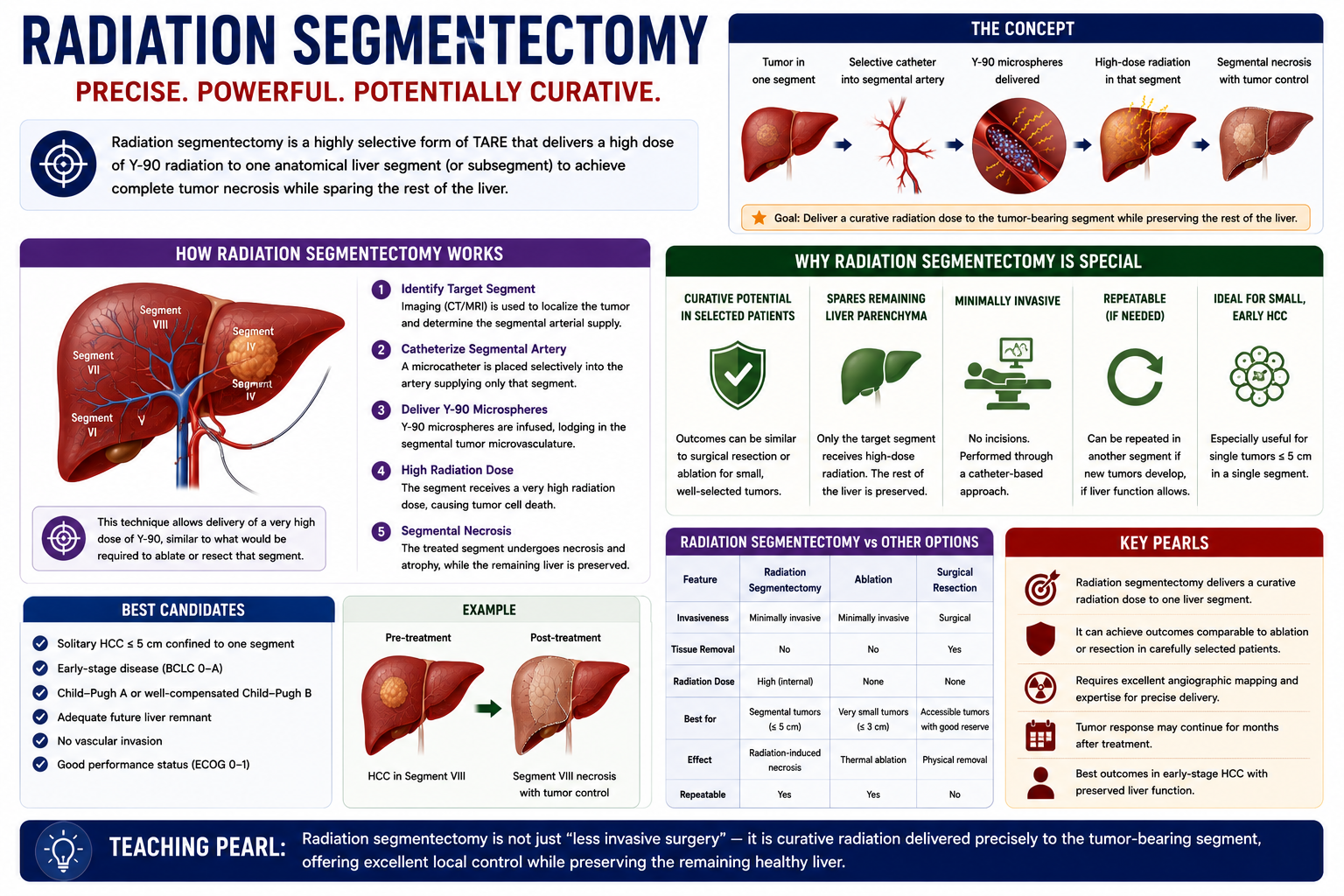
Radiation segmentectomy is very selective Y-90 treatment directed to one liver segment. It aims to deliver a high radiation dose to a small region while sparing the rest of the liver.
Radiation segmentectomy can achieve outcomes similar to ablation or resection in selected patients.
Radiation Lobectomy
Radiation lobectomy uses Y-90 to treat an entire liver lobe rather than a single segment.
The goal is not only tumor control but also stimulation of growth in the future liver remnant.
Radiation lobectomy may convert selected patients from unresectable disease to surgical candidates.

Bridge and Downstaging Therapy
TARE may be used as bridge therapy while a patient waits for transplantation. It may also be used for downstaging when tumor burden is initially beyond transplant criteria.
For transplant selection, review Milan Criteria Overview and Liver Transplantation Explained.
Bridge therapy preserves eligibility. Downstaging creates eligibility.

TARE vs TACE
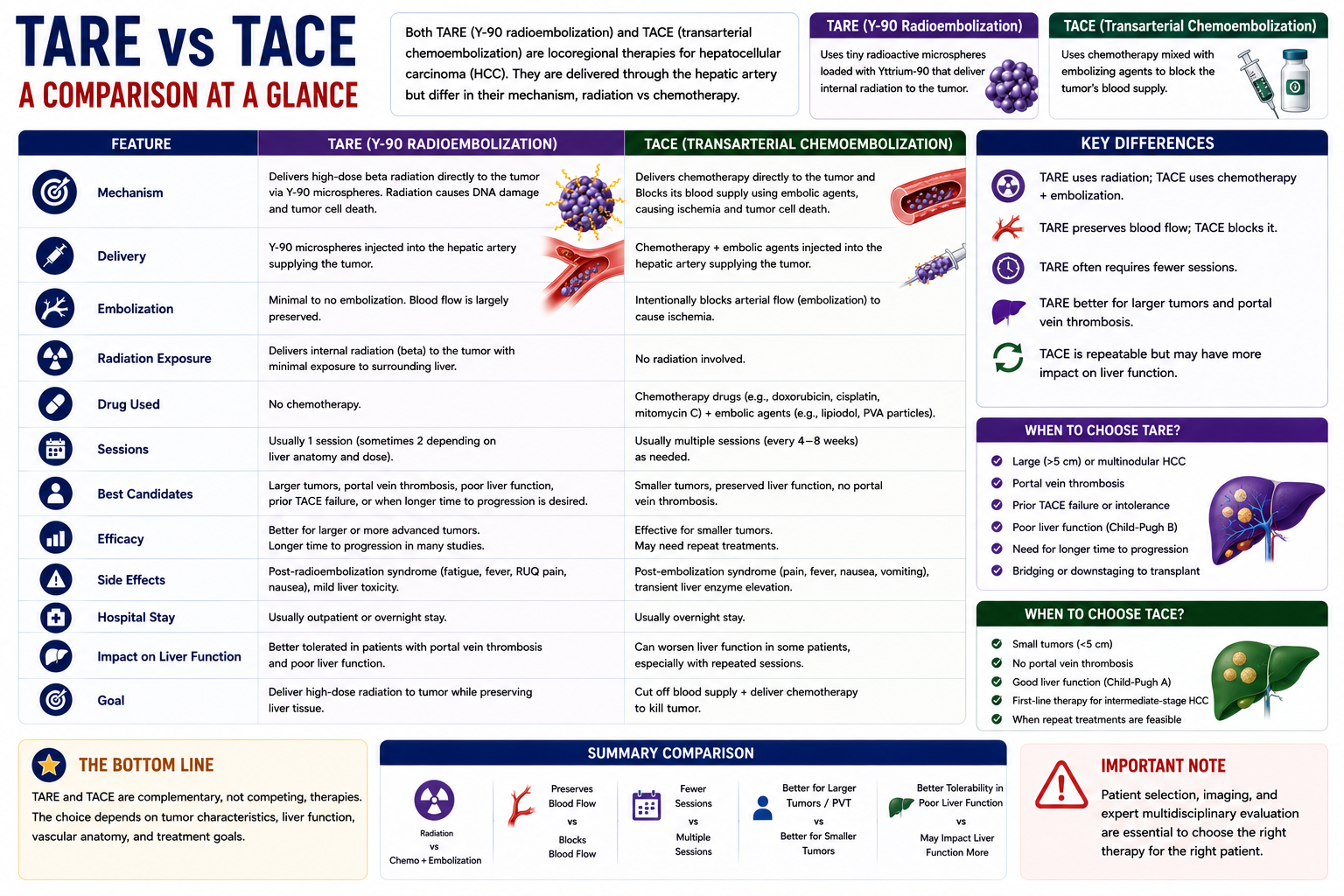
TACE vs TARE is one of the most important comparisons in catheter-based HCC therapy.
| Feature | TARE | TACE |
|---|---|---|
| Main therapy | Radiation | Chemotherapy |
| Ischemia | Minor | Major |
| Y90 | Yes | No |
| Drug delivery | No | Yes |
| Portal vein thrombosis | Often feasible in selected patients | More limited |
For the companion article, see TACE Explained.
Response Assessment After TARE
Response after TARE is assessed by enhancement, necrosis and tumor viability. Size alone can be misleading because radiation effects may evolve over time.

mRECIST Overview
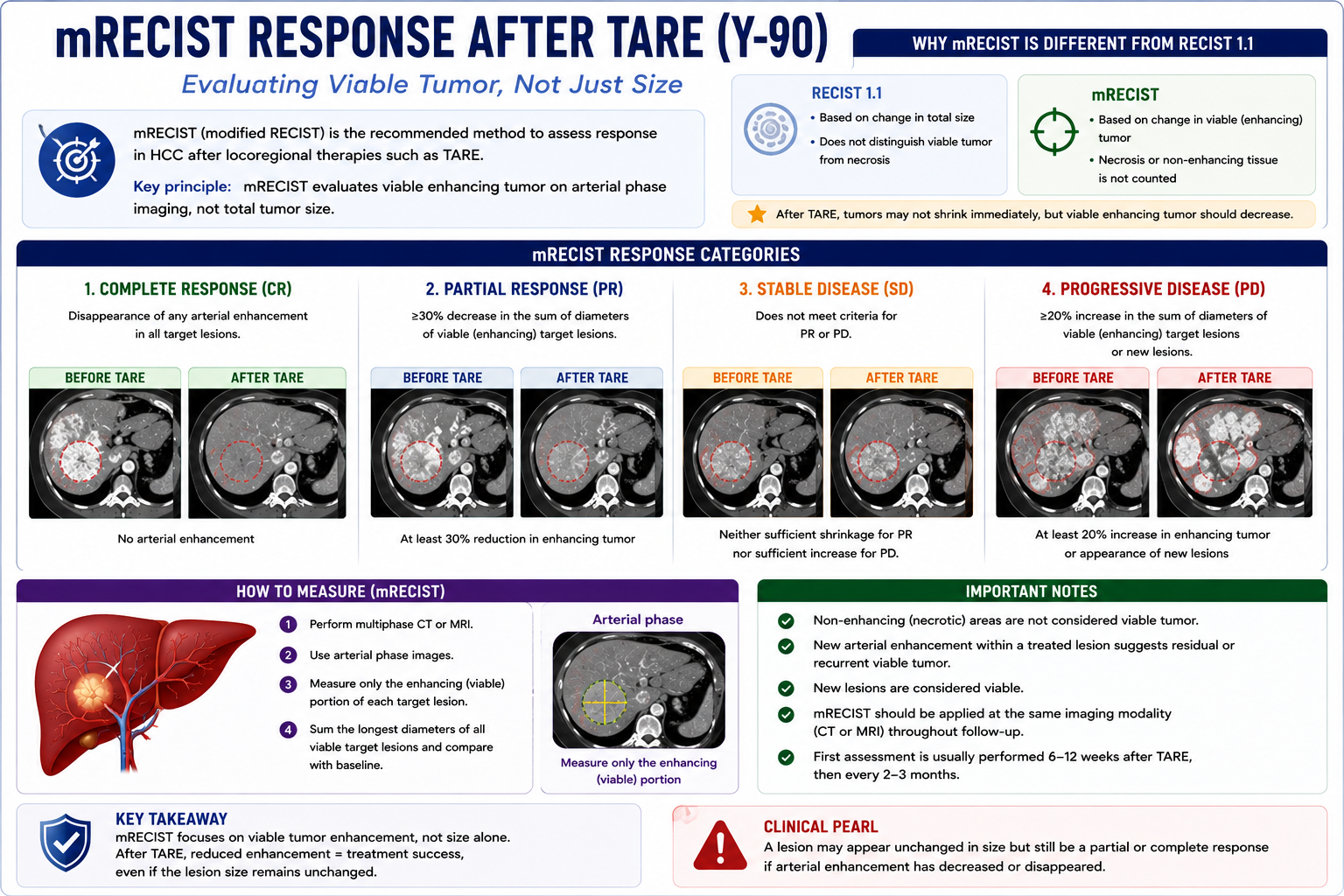
Response after TARE is commonly assessed using modified Response Evaluation Criteria in Solid Tumors (mRECIST). Unlike conventional RECIST, mRECIST focuses on the viable enhancing portion of the tumor.
| Response | Definition |
|---|---|
| Complete Response (CR) | No arterial enhancement remains within the treated lesion. |
| Partial Response (PR) | At least 30% reduction in viable enhancing tumor. |
| Stable Disease (SD) | Neither sufficient shrinkage for PR nor sufficient increase for PD. |
| Progressive Disease (PD) | At least 20% increase in viable tumor or appearance of new lesions. |
mRECIST evaluates viable enhancing tumor. A treated mass may remain visible on imaging but still represent successful treatment if enhancement has disappeared.
Tumors often continue responding after radiation has already been delivered.
Complications of TARE
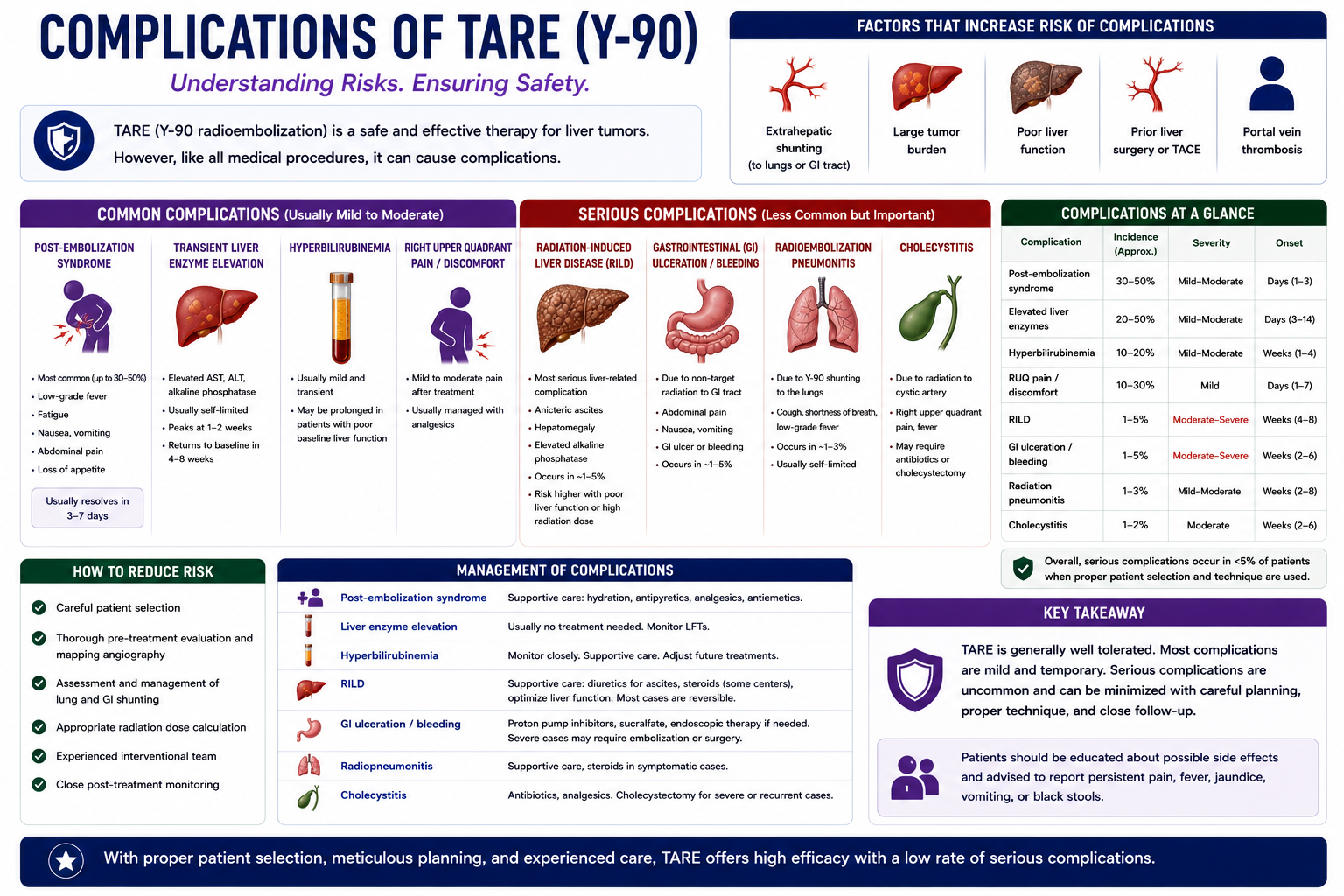
Y90 complications include common mild symptoms and rare serious radiation-related injuries.
| Complication | Explanation |
|---|---|
| Fatigue | Common |
| Abdominal discomfort | Usually mild |
| Radiation hepatitis | Rare but serious |
| GI ulceration | Non-target delivery |
| Biliary injury | Uncommon |
| Radiation pneumonitis | Rare; related to lung shunting |
Fatigue + mild abdominal pain + nausea is a common post-radioembolization pattern.
Prognosis After TARE
Outcome after TARE depends on liver function, tumor burden, portal vein invasion, treatment response and transplant eligibility.
| Better Outcome | Worse Outcome |
|---|---|
| Good liver reserve | Poor liver reserve |
| Limited disease | Extensive tumor burden |
| Good radiological response | Progression despite therapy |
| Bridge/downstaging success | Loss of transplant eligibility |

One-Minute Revision
If you remember one idea, remember this: TARE uses the arterial supply of HCC to deliver Y-90 microspheres that irradiate tumor tissue from within.

High-Yield Exam Pearls
- TARE = transarterial radioembolization.
- It uses yttrium-90 microspheres.
- Main treatment effect is radiation.
- HCC is arterial dominant.
- TARE requires mapping angiogram before treatment.
- It can be used in selected portal vein thrombosis.
- Radiation segmentectomy is highly selective.
- Bridge therapy preserves transplant eligibility.
- Downstaging creates transplant eligibility.
- Response may continue for months.
Frequently Asked Questions
Key Takeaways
- TARE is catheter-directed radioembolization with Y-90 microspheres.
- It works because HCC is supplied mainly by arteries.
- Mapping angiogram is required before treatment.
- Lung shunt fraction matters because excessive shunting can expose the lungs to radiation.
- The main effect is radiation rather than ischemia.
- TARE can fit across selected BCLC stages depending on treatment goals and liver reserve.
- TARE may be useful for bridge therapy, downstaging and selected portal vein thrombosis.
- Radiation segmentectomy is highly selective high-dose treatment for selected small tumors.
- Radiation lobectomy can combine tumor control with future liver remnant growth.
TARE is best understood as catheter-directed internal radiation. It uses HCC arterial supply to deliver Y-90 microspheres, requires careful mapping and lung shunt assessment, and can support tumor control, bridge therapy, downstaging, radiation segmentectomy and radiation lobectomy.
References
- Singal AG, Llovet JM, Yarchoan M, et al. AASLD Practice Guidance on prevention, diagnosis, and treatment of hepatocellular carcinoma. Hepatology. 2023;78(6):1922-1965.
- National Cancer Institute. Primary Liver Cancer Treatment (PDQ): Health Professional Version. Updated 2025.
- Salem R, Lewandowski RJ, Kulik L, et al. Radioembolization results in longer time-to-progression and reduced toxicity compared with chemoembolization in patients with hepatocellular carcinoma. Gastroenterology. 2011;140(2):497-507.e2.
- Riaz A, Awais R, Salem R. Side effects of yttrium-90 radioembolization. Front Oncol. 2014;4:198.
- Reig M, Forner A, Rimola J, et al. BCLC strategy for prognosis prediction and treatment recommendation: The 2022 update. J Hepatol. 2022;76(3):681-693.
This article is intended for medical education only. It does not constitute clinical advice. TARE decisions require specialist hepatology, interventional radiology, nuclear medicine, radiation safety, oncology, transplant and multidisciplinary tumor-board assessment.