Many people think liver cancer treatment always requires surgery.
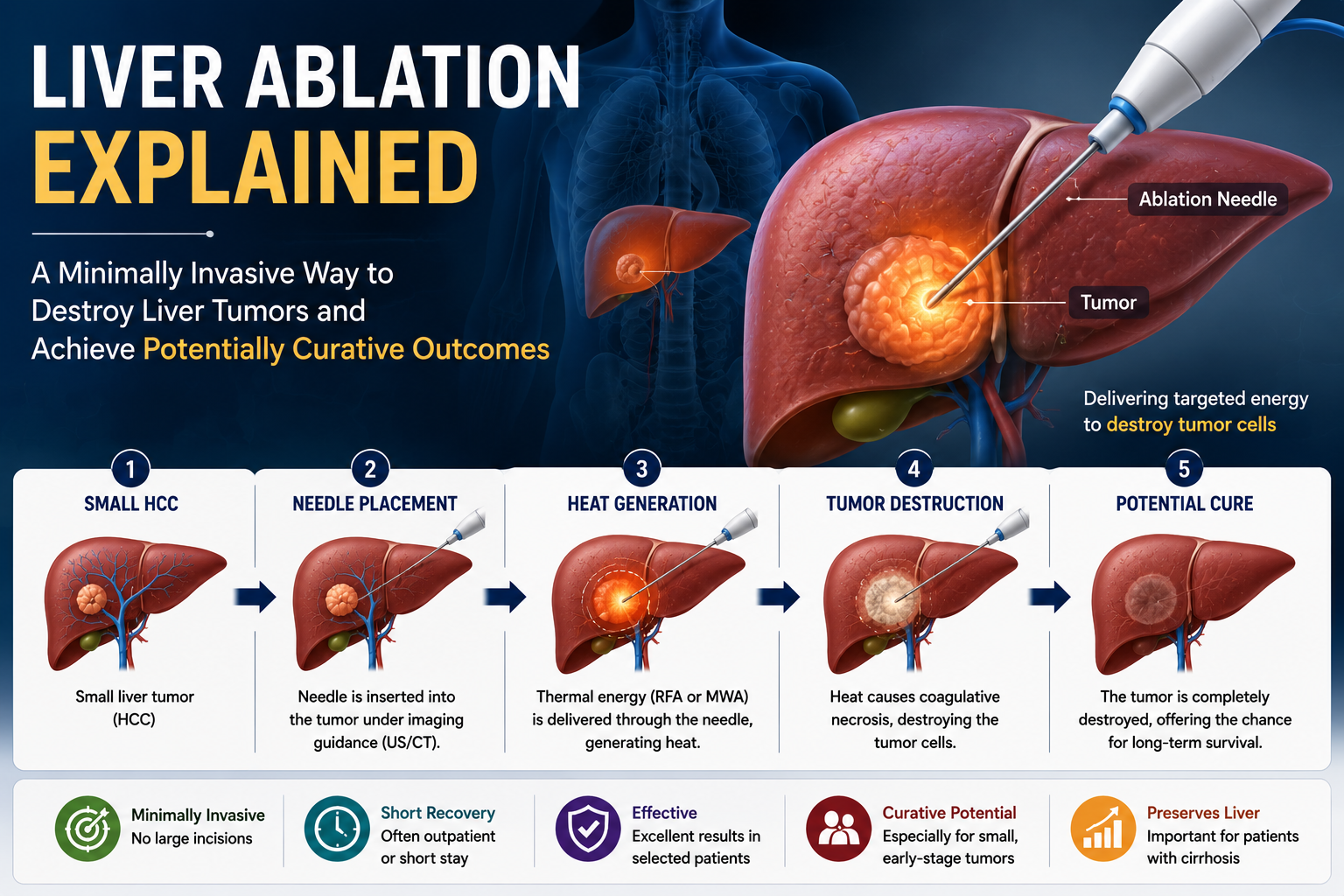
For selected small HCC, a needle can be placed into the tumor and thermal energy can destroy the tumor in place. This makes ablation a minimally invasive, potentially curative small HCC treatment.
Liver ablation explained simply means this: destroy the tumor locally without surgically removing that part of the liver.
Learning Objectives
- Define liver ablation
- Understand thermal tumor destruction
- Recognize radiofrequency ablation HCC and microwave ablation HCC
- Compare RFA and MWA
- Understand indications and tumor size limits
- Compare ablation with resection, transplant and TACE
- Recognize complications and prognosis
What Is Liver Ablation?
Liver ablation is a local treatment that destroys tumors using energy delivered through a needle or probe.
Ablation destroys tumors in place rather than removing them.

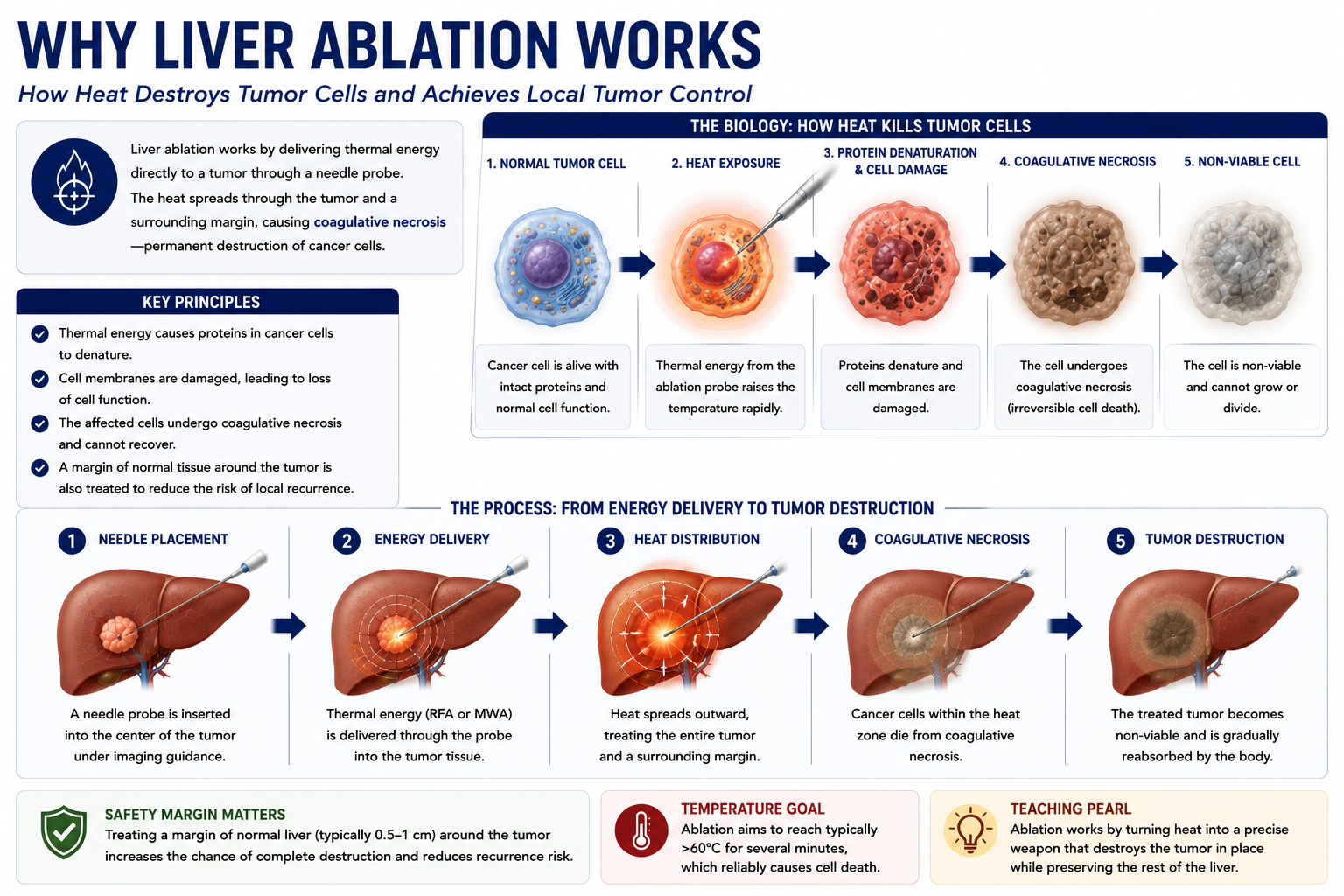
Why Ablation Works
Thermal ablation liver treatment works because heat injures tumor cells directly. Heat causes protein denaturation, cell membrane damage, coagulative necrosis and tumor death.
The technical goal is not only to destroy the visible tumor, but also to destroy a surrounding safety margin where microscopic tumor cells may be present.
The goal is complete destruction of both the visible tumor and a surrounding safety margin.
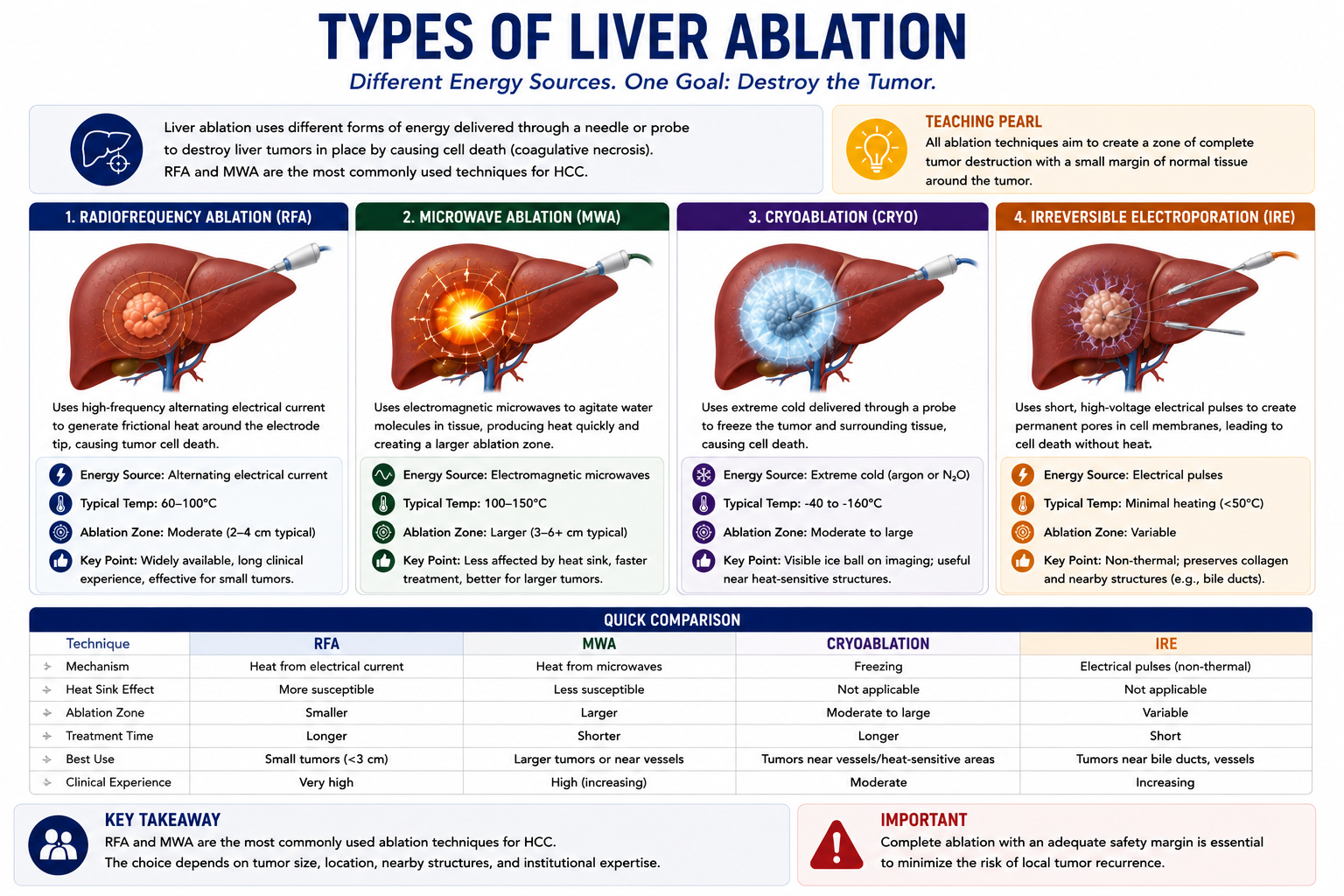
Types of Liver Ablation
| Type | Mechanism |
|---|---|
| Radiofrequency ablation | Electrical current |
| Microwave ablation | Microwave energy |
| Cryoablation | Freezing |
| Irreversible electroporation | Electrical membrane injury |
RFA and MWA are the most commonly used techniques for HCC.
Radiofrequency Ablation (RFA)
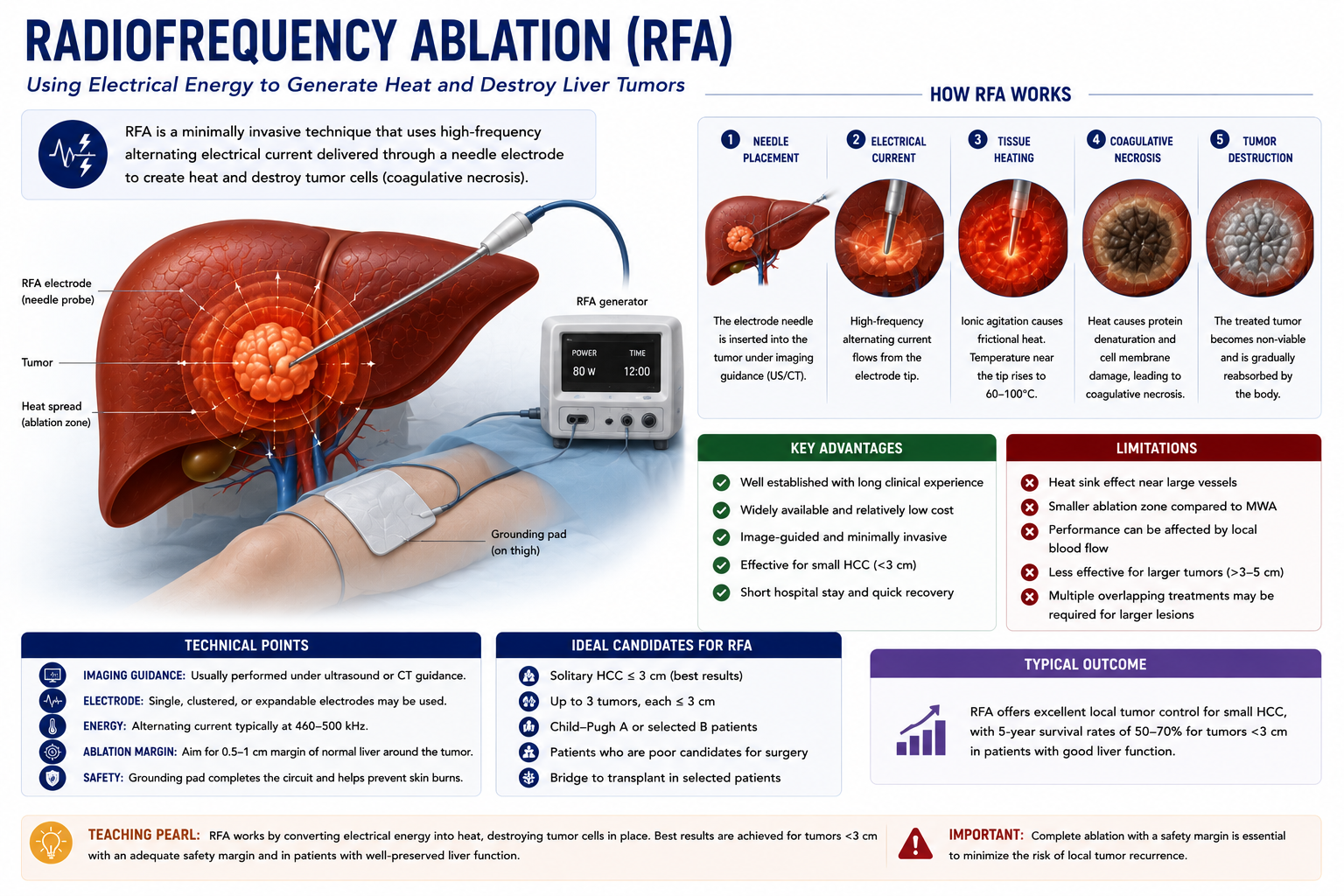
Radiofrequency ablation HCC treatment uses an electrode needle that delivers alternating electrical current into tissue, generating heat around the probe.
RFA liver tumor therapy has long clinical experience, is widely available, and has good outcomes in small HCC. Limitations include heat sink effect near large vessels and a smaller treatment zone compared with MWA.
Microwave Ablation (MWA)
Microwave ablation HCC treatment uses a microwave antenna to generate rapid tissue heating and tumor destruction.
MWA liver tumor therapy can reach higher temperatures, create larger ablation zones and is less affected by heat sink than RFA. Many centers increasingly prefer MWA for suitable liver tumors.
MWA is increasingly preferred in many centers.
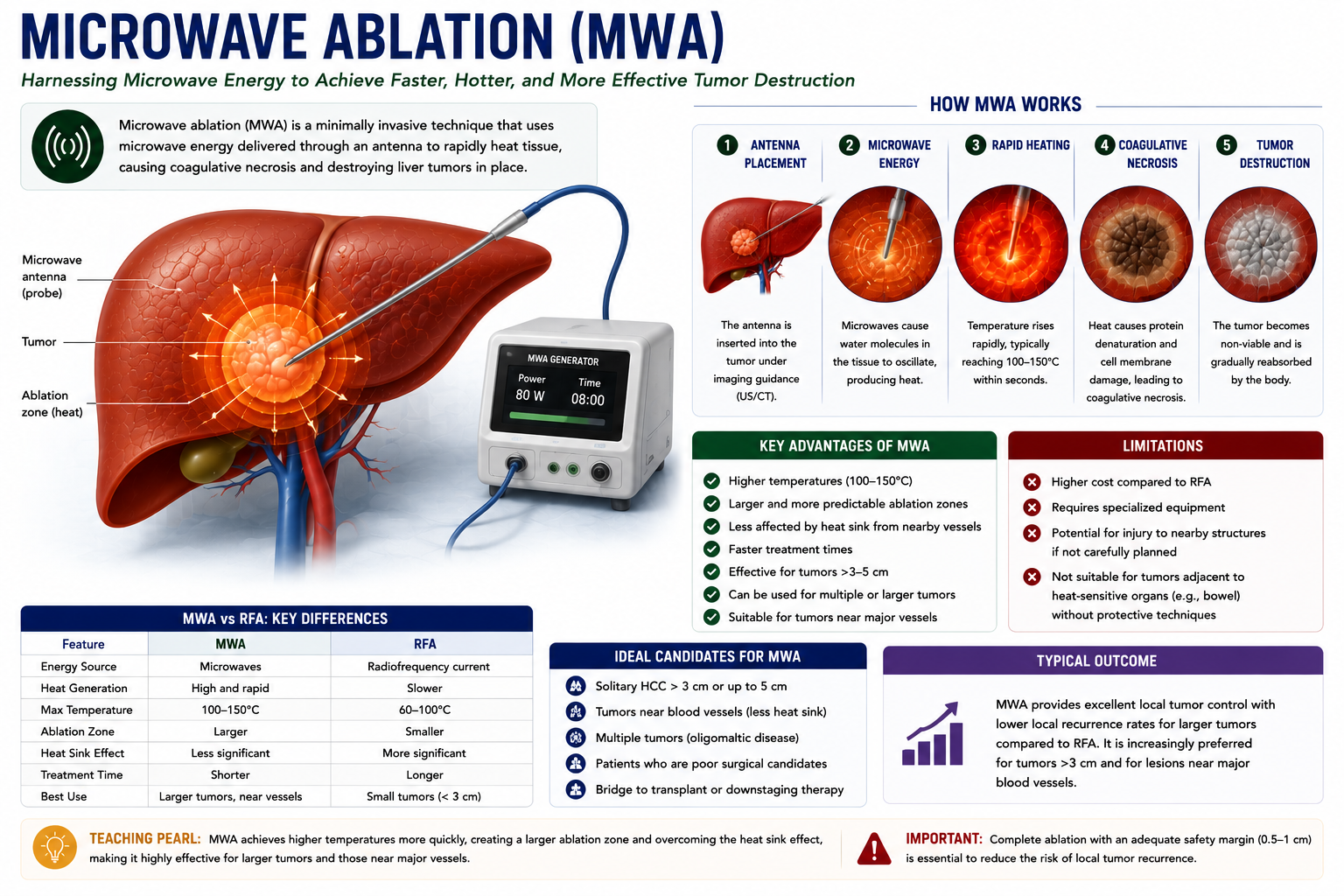
RFA vs MWA
| Feature | RFA | MWA |
|---|---|---|
| Energy | Electrical current | Microwave |
| Heat sink effect | More | Less |
| Ablation zone | Smaller | Larger |
| Treatment speed | Slower | Faster |
| Current popularity | High | Increasing |

Who Should Receive Ablation?
Liver ablation for HCC is most useful when the tumor is small, limited in number and technically accessible.
- Small HCC
- Early-stage disease
- Patients unsuitable for surgery
- Bridge therapy before transplant
- Limited number of lesions
| Feature | Why Suitable |
|---|---|
| Small tumor | Easier complete destruction |
| Early HCC | Curative intent |
| Poor surgical candidate | Minimally invasive |
| Waiting for transplant | Tumor control while awaiting donor liver |

Tumor Size and Ablation Success
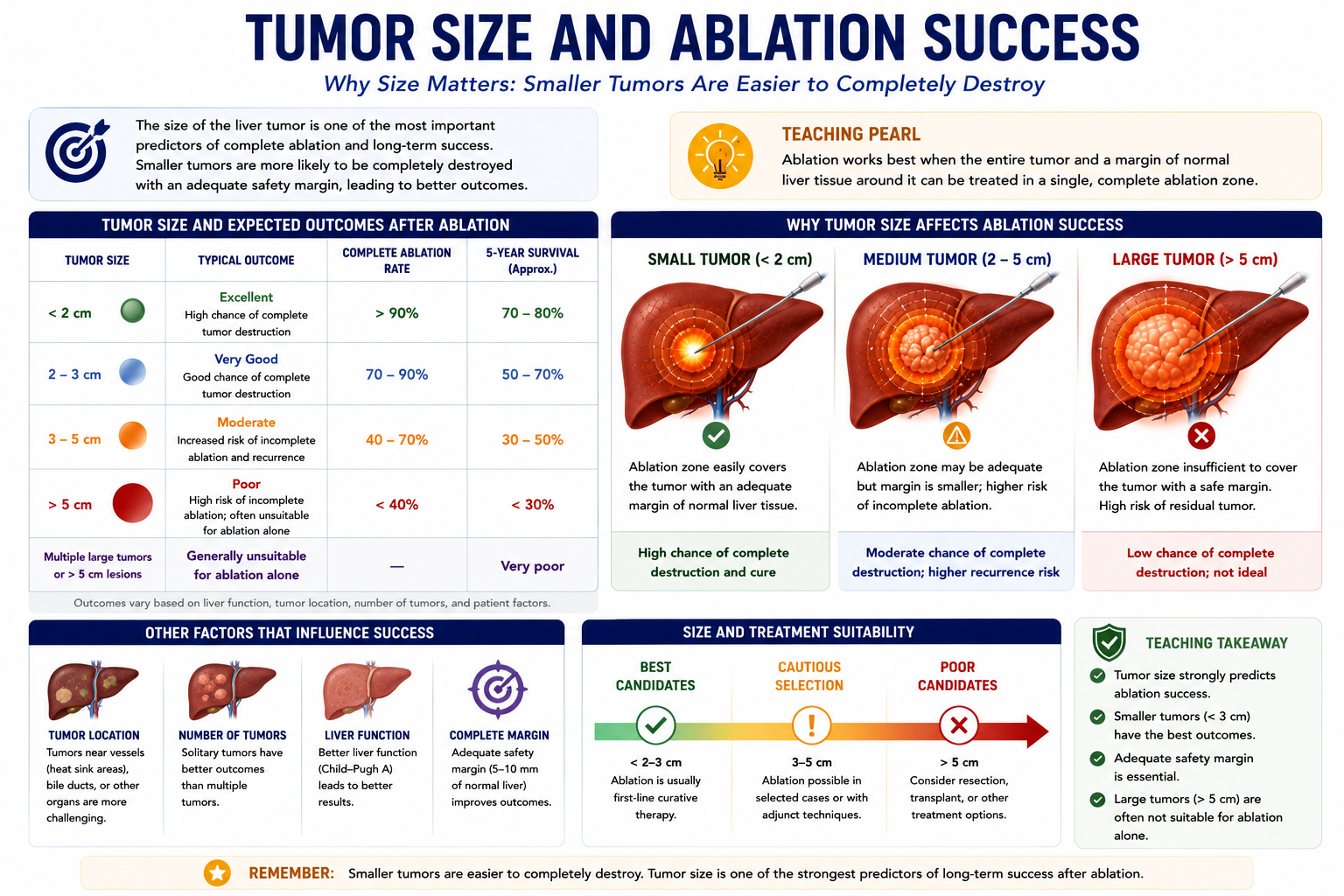
Tumor size is one of the strongest predictors of ablation success. Smaller tumors are easier to cover completely with a safety margin.
| Tumor Size | Typical Outcome |
|---|---|
| <2 cm | Excellent |
| 2-3 cm | Very good |
| 3-5 cm | Reduced success |
| >5 cm | Often unsuitable alone |
Tumor size is one of the strongest predictors of success.
Ablation vs Resection
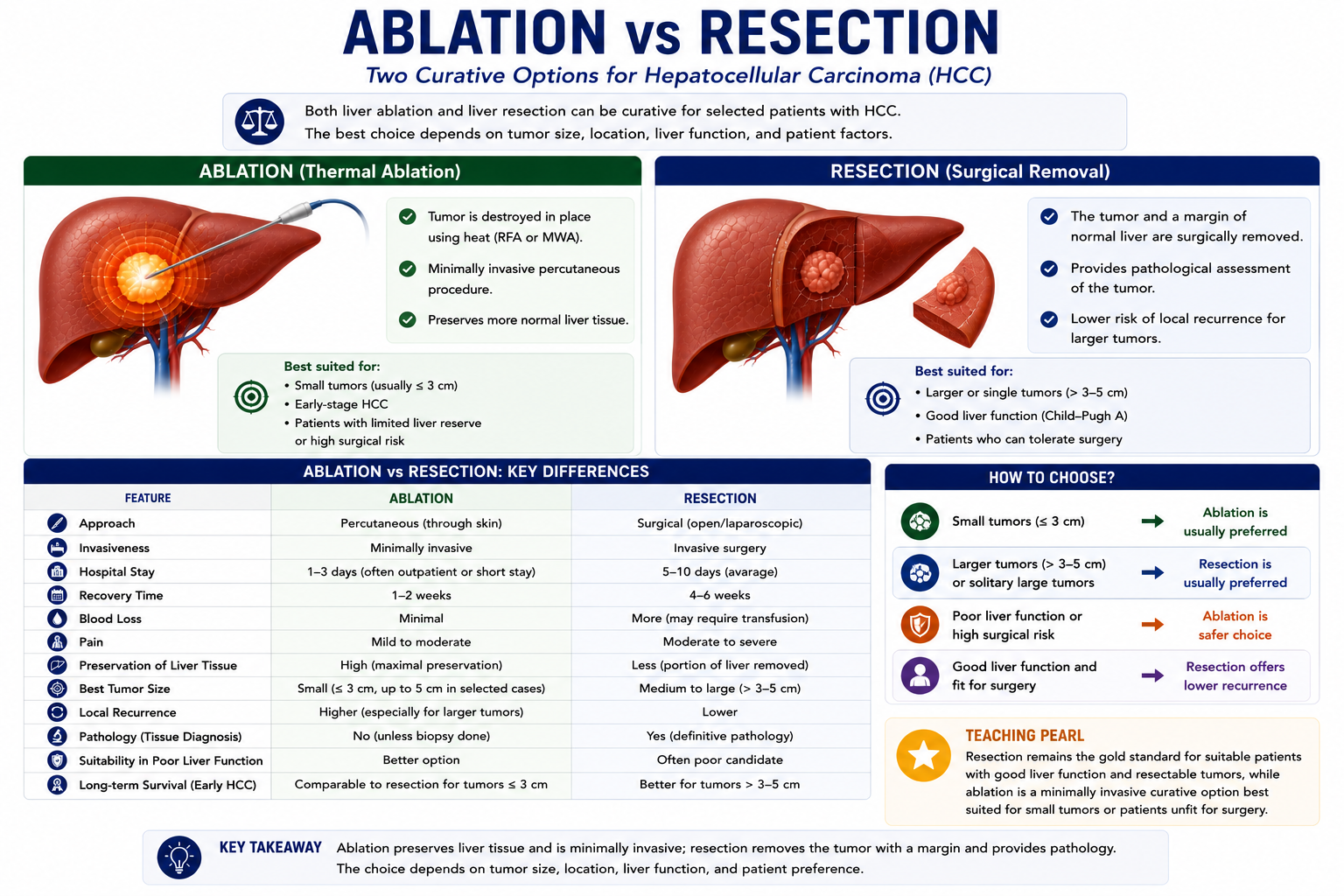
Ablation vs resection is a common curative-treatment comparison in early HCC.
| Feature | Ablation | Resection |
|---|---|---|
| Invasiveness | Minimal | Surgery |
| Recovery | Faster | Slower |
| Best for | Small tumors | Larger resectable tumors |
| Hospital stay | Shorter | Longer |
Resection remains the standard curative treatment for many suitable surgical patients.
Ablation vs Transplant
Ablation vs transplant is not just a tumor-treatment comparison. Transplant also treats the underlying cirrhotic liver.
| Feature | Ablation | Transplant |
|---|---|---|
| Treats tumor | Yes | Yes |
| Removes cirrhosis | No | Yes |
| Donor required | No | Yes |
| Waiting list | No | Often yes |
Review Liver Transplantation Explained and Milan Criteria Overview for the transplant pathway.
Transplant treats both HCC and the underlying cirrhosis.

Ablation vs TACE
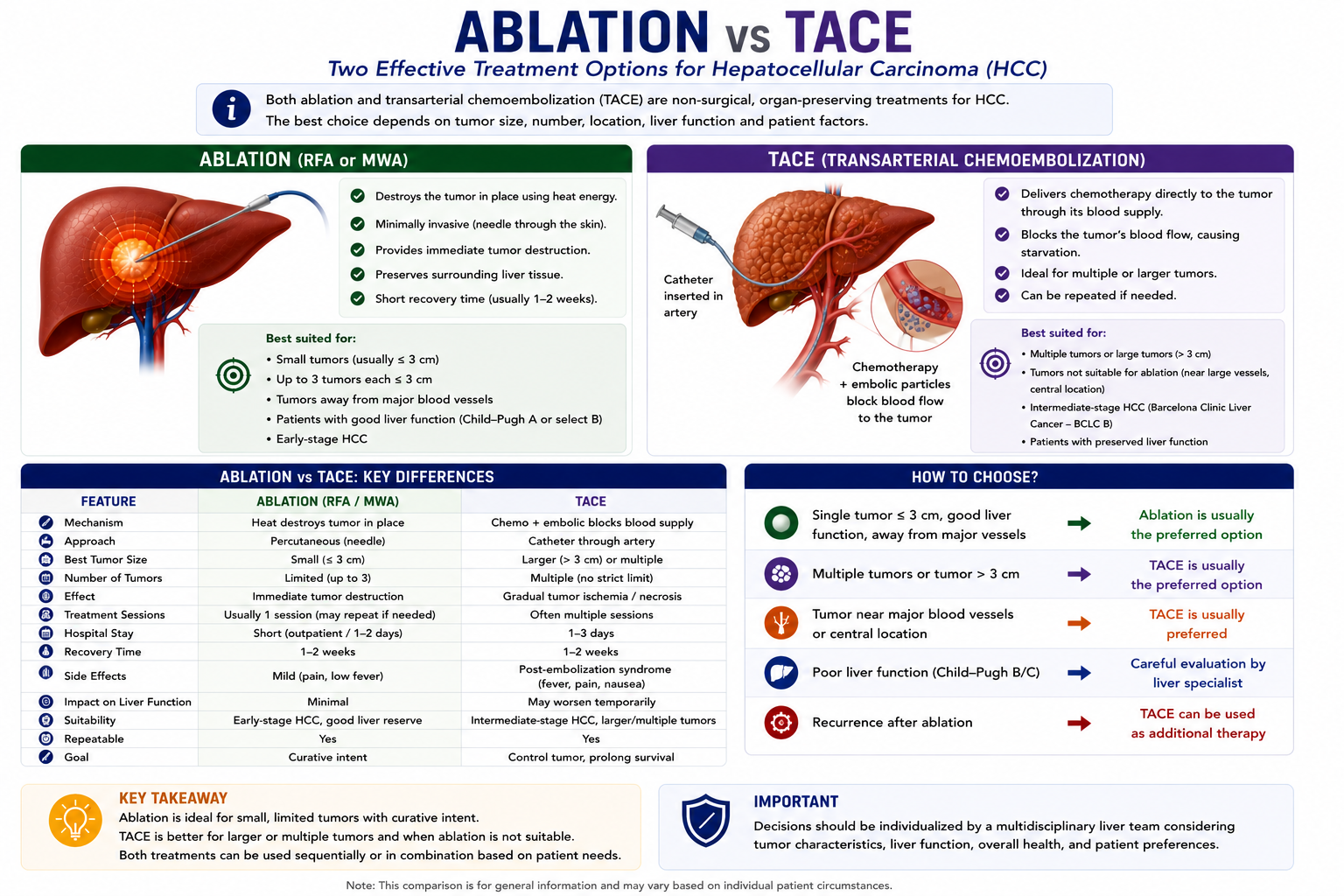
Ablation vs TACE is a key HCC treatment comparison because the treatment intent is often different.
| Feature | Ablation | TACE |
|---|---|---|
| Goal | Curative | Usually disease control |
| Best tumor size | Small | Larger or multifocal |
| Needle placement | Yes | No |
| Arterial catheter | No | Yes |
For catheter-based therapy, see TACE Explained and TARE Explained.
Ablation is usually preferred over TACE when a small tumor is technically suitable.
Complications of Ablation
| Complication | Explanation |
|---|---|
| Pain | Common |
| Bleeding | Uncommon |
| Infection | Rare |
| Bile duct injury | Rare |
| Thermal injury | Nearby structures |
| Liver failure | Rare, higher risk with poor reserve |
Most complications are uncommon when procedures are carefully planned.

Prognosis After Ablation
Outcome after ablation depends on tumor size, tumor location, complete ablation, liver function and recurrence risk.
| Better Prognosis | Worse Prognosis |
|---|---|
| Small tumor | Large tumor |
| Complete treatment margin | Incomplete ablation |
| Good liver reserve | Poor liver function |
| Favorable location | Near major vessels, bile ducts or bowel |

One-Minute Revision
If you remember one idea, remember this: ablation is curative-intent local heat destruction for selected small HCCs.

High-Yield Exam Pearls
- Ablation destroys tumors without surgical removal.
- RFA uses electrical current.
- MWA uses microwave energy.
- MWA produces larger ablation zones and is less affected by heat sink.
- Small tumors respond best.
- Tumor size strongly predicts success.
- Ablation may be curative in selected small HCC.
- Transplant treats both tumor and cirrhosis.
- TACE usually controls disease rather than curing it.
Frequently Asked Questions
Key Takeaways
- Liver ablation destroys tumor tissue in place using local energy.
- RFA uses electrical current; MWA uses microwave energy.
- Small HCCs, especially under 3 cm, are the best candidates.
- Complete treatment requires both tumor destruction and a safety margin.
- Ablation may be curative, while TACE is usually disease control.
- Ablation treats the tumor but does not remove cirrhosis.
Liver ablation is best understood as curative-intent local tumor destruction for selected small HCC. RFA and MWA use thermal energy to cause coagulative necrosis, with best outcomes when tumors are small, technically accessible and completely covered by an ablation margin.
References
- Singal AG, Llovet JM, Yarchoan M, et al. AASLD Practice Guidance on prevention, diagnosis, and treatment of hepatocellular carcinoma. Hepatology. 2023;78(6):1922-1965.
- National Cancer Institute. Primary Liver Cancer Treatment (PDQ): Health Professional Version. Updated 2025.
- Reig M, Forner A, Rimola J, et al. BCLC strategy for prognosis prediction and treatment recommendation: The 2022 update. J Hepatol. 2022;76(3):681-693.
- European Association for the Study of the Liver. EASL Clinical Practice Guidelines: Management of hepatocellular carcinoma. J Hepatol. 2018;69(1):182-236.
- Livraghi T, Meloni F, Di Stasi M, et al. Sustained complete response and complications rates after radiofrequency ablation of very early hepatocellular carcinoma. Hepatology. 2008;47(1):82-89.
This article is intended for medical education only. It does not constitute clinical advice. Liver ablation decisions require specialist hepatology, interventional radiology, oncology, transplant and multidisciplinary tumor-board assessment.