Most students memorise the anion gap formula before they understand what the gap actually represents. The anion gap is not a mysterious extra test. It is a way of estimating the unmeasured negatively charged particles in blood using routinely measured electrolytes.
This article builds directly on Metabolic Acidosis Explained and Acid-Base Disorders Explained. It focuses on what the anion gap means, how to calculate it, why albumin matters, and how to use it clinically.
Learning Objectives
- Define the anion gap and explain why it exists
- Use the anion gap formula correctly
- Explain measured and unmeasured ions
- Identify what a normal or high anion gap means
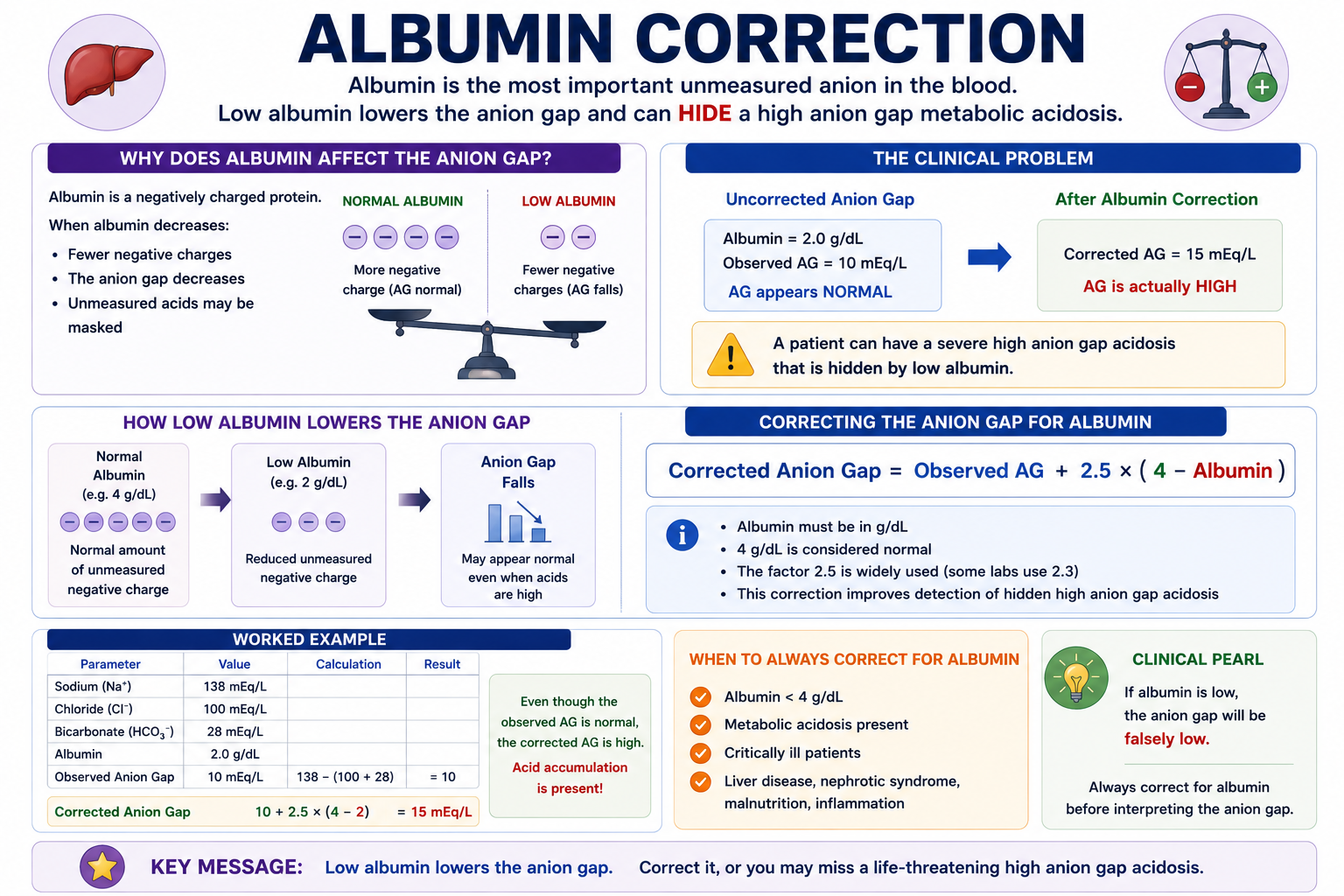
- Explain why albumin changes the anion gap
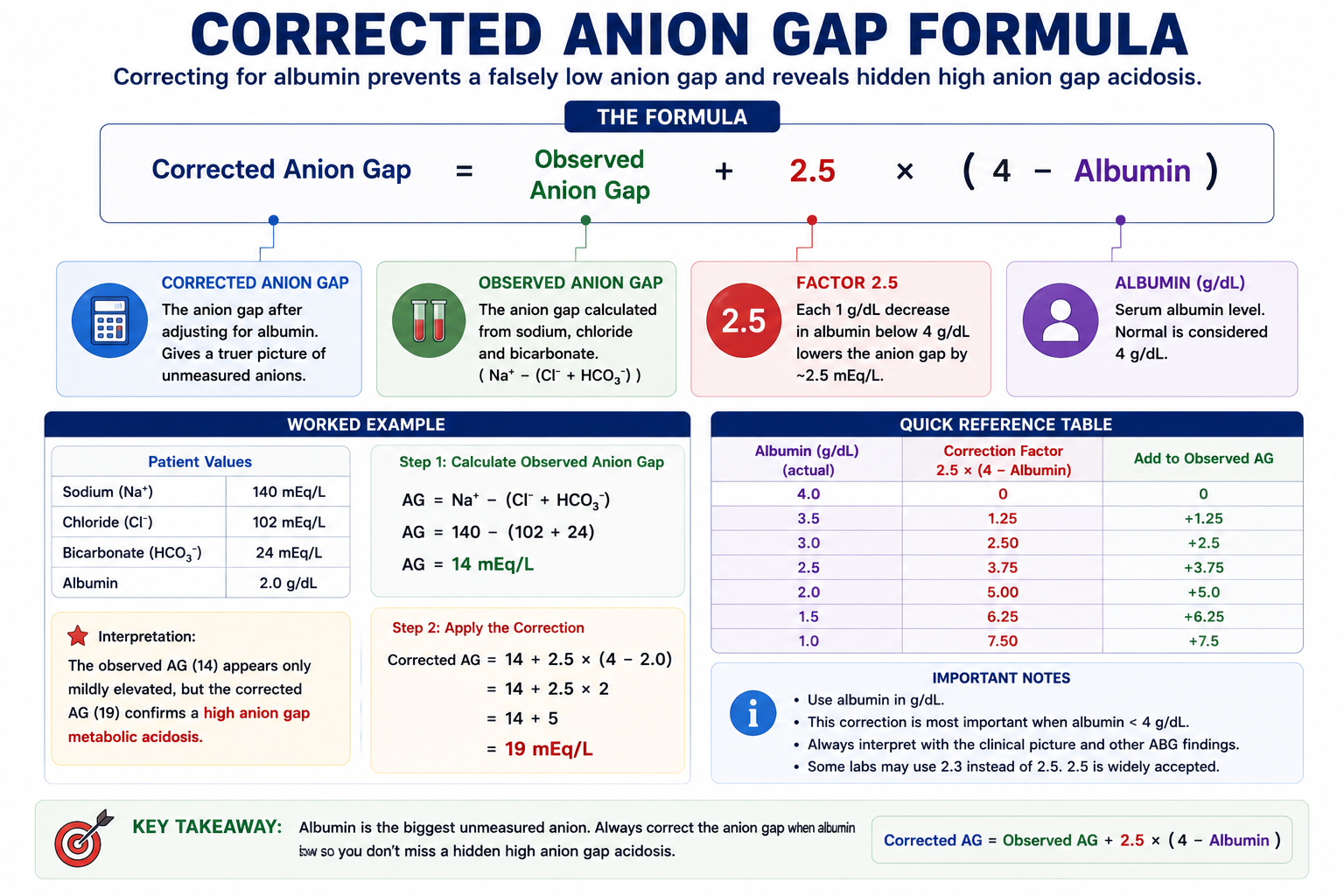
- Calculate an albumin-corrected anion gap
- Apply the anion gap in metabolic acidosis interpretation
What Is the Anion Gap?
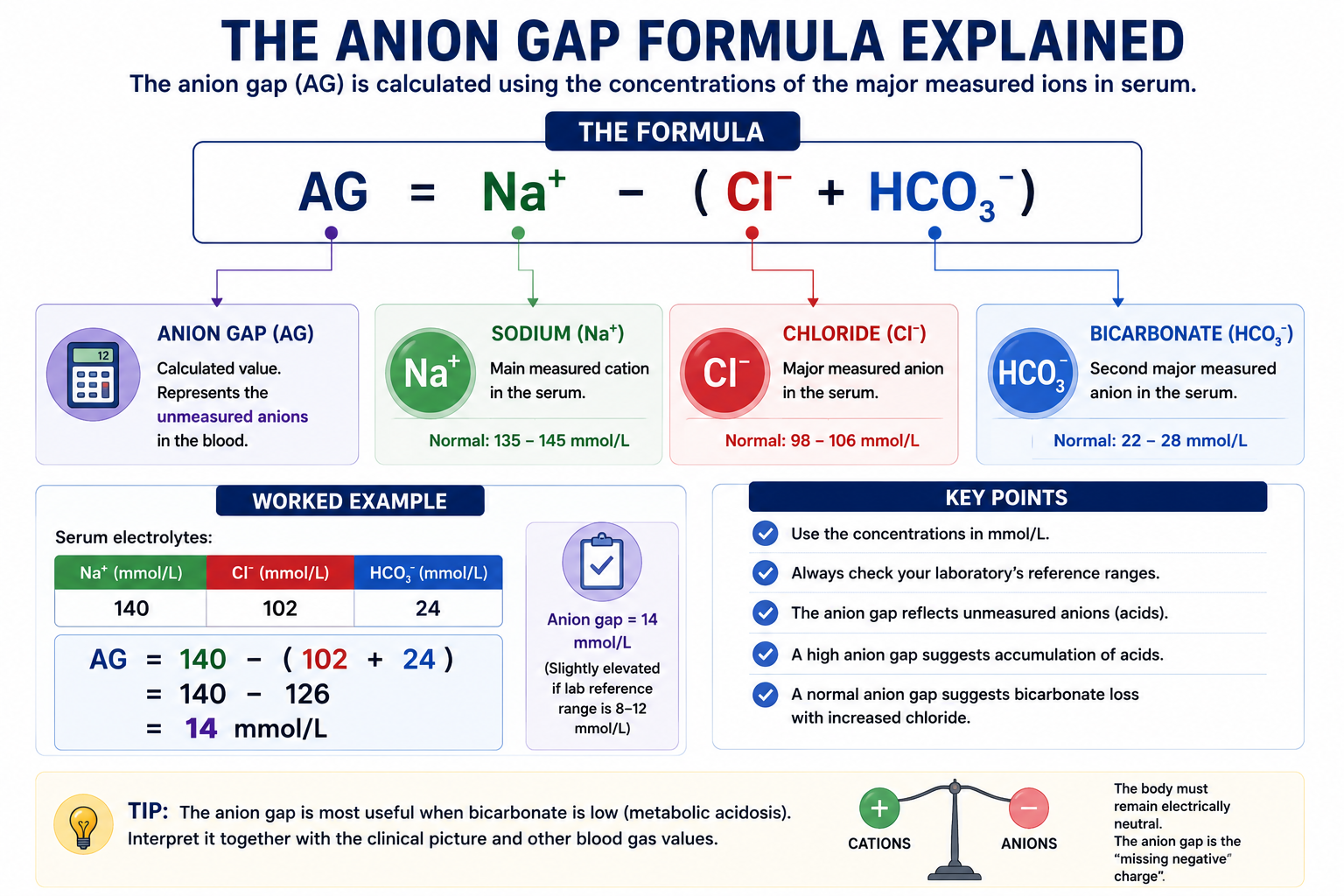
The anion gap is the difference between measured cations and measured anions. In the common clinical formula, sodium is the main measured cation, while chloride and bicarbonate are the measured anions.
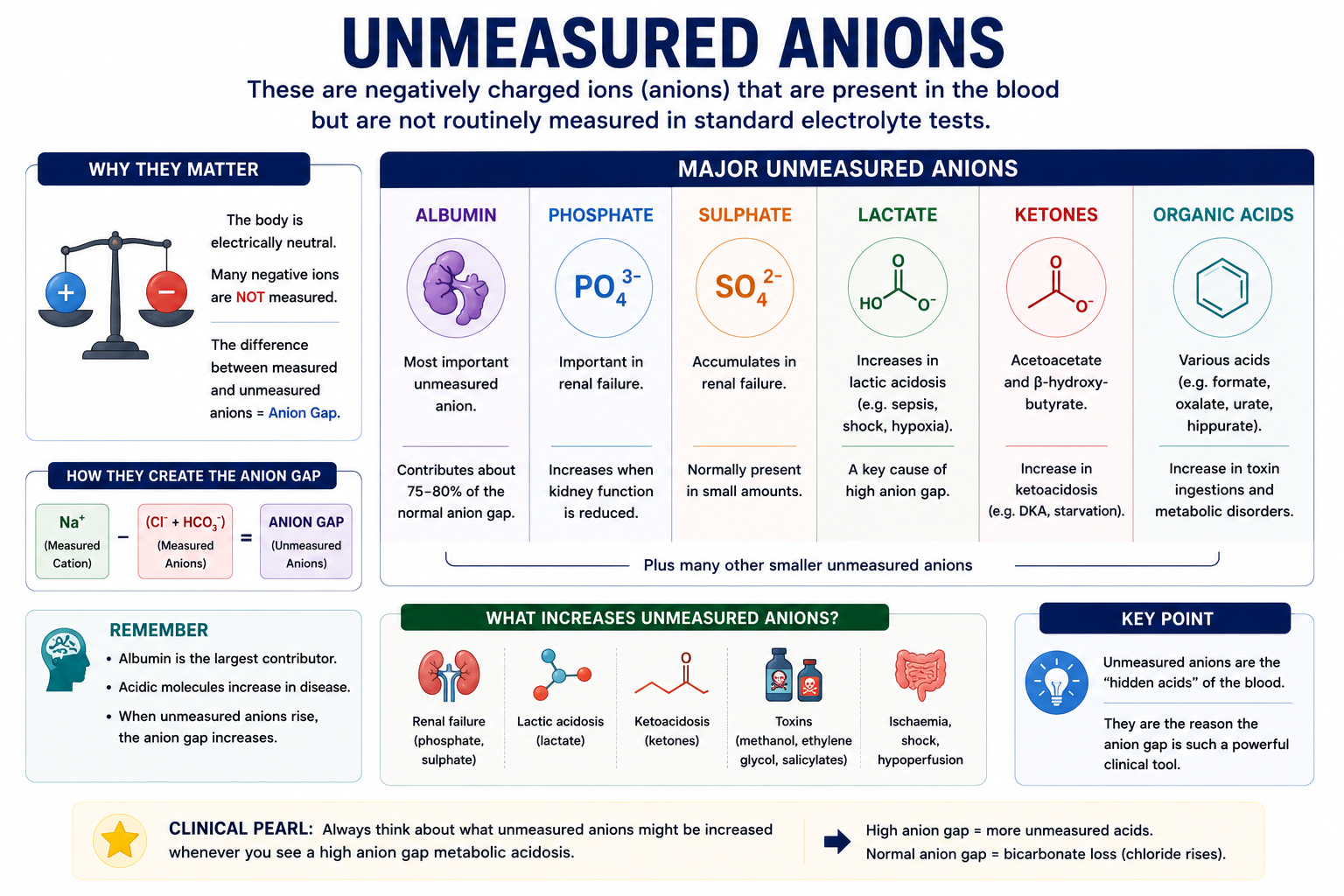
The anion gap is therefore a calculated estimate of the anions that are present in blood but not included in the routine electrolyte formula. These are called unmeasured anions.
The anion gap is the difference between measured positive ions and measured negative ions. It estimates unmeasured anions, especially albumin under normal conditions and pathological acid anions during high anion gap metabolic acidosis.
The body as a whole is electrically neutral:
However, routine laboratory panels measure only some of those charges. The gap between measured and unmeasured ions is what makes the anion gap clinically useful.

Why Does the Anion Gap Exist?
The anion gap exists because laboratories do not routinely measure every charged molecule in blood. We commonly measure sodium, chloride and bicarbonate. We do not routinely include albumin, phosphate, sulphate, lactate, ketones and many organic acids in the standard formula.
Routine anion gap calculation uses:
- Na+: the main measured cation
- Cl-: the major measured anion
- HCO3-: the second major measured anion
Important unmeasured anions include:
- Albumin
- Phosphate
- Sulphate
- Lactate
- Ketones
- Organic acids
The Anion Gap Formula
The classic anion gap formula is:
Why Does the Formula Work?
Sodium is the major measured positive ion in extracellular fluid. Chloride and bicarbonate are the major measured negative ions used in routine electrolyte interpretation. The difference between sodium and the measured anions estimates the amount of negative charge carried by unmeasured anions.
When acids such as lactate, ketones or toxic alcohol metabolites accumulate, their negative anions increase. This increases the anion gap.
Why Is Potassium Usually Excluded?
Some older formulas include potassium:
However, potassium concentration is much lower than sodium concentration and usually contributes little to the final result. For simplicity, most modern clinical teaching and many laboratories use the formula without potassium:
Formula Breakdown
Sodium is the main measured cation. Chloride is the major measured anion. Bicarbonate is the other major measured anion used in the formula. The remaining difference estimates unmeasured anions.
Worked Example
| Variable | Value | Role |
|---|---|---|
| Na+ | 140 mmol/L | Main measured cation |
| Cl- | 102 mmol/L | Measured anion |
| HCO3- | 24 mmol/L | Measured anion |
For calculation support, use the Anion Gap Calculator.
Whether 14 is normal or mildly elevated depends on the laboratory reference range and albumin concentration. This is why interpretation matters more than the raw calculation alone.
Unmeasured Anions
The most important unmeasured anion under normal conditions is albumin. Albumin carries negative charge, so it contributes a large part of the normal anion gap. This is why hypoalbuminaemia can make the observed anion gap look deceptively low.
Other unmeasured anions become clinically important when they accumulate. Lactate rises in lactic acidosis. Ketones rise in diabetic, alcoholic or starvation ketoacidosis. Sulphate and phosphate can accumulate in renal failure. Toxic alcohols produce acidic metabolites such as formate, glycolate and oxalate.
Albumin contributes most of the normal anion gap. Always think about albumin before declaring a gap normal.
Normal Values
A commonly used normal anion gap range is 8-12 mmol/L. Some laboratories use 6-12 mmol/L or another locally validated range. Always interpret the result using the local laboratory reference range when available.
| Anion gap | Typical interpretation | Important caution |
|---|---|---|
| Normal | No obvious increase in unmeasured anions | May be falsely reassuring if albumin is low |
| High | Unmeasured anions have increased | Usually suggests acid accumulation in metabolic acidosis |
A normal anion gap usually means there is no major accumulation of unmeasured acids, but it does not exclude serious illness. A patient can be critically unwell with normal anion gap metabolic acidosis, especially from severe diarrhoea or renal tubular acidosis.

Modern ion-selective electrode analysers often produce lower reference ranges than older laboratory methods, so a value considered elevated by one laboratory may be normal on another instrument. For patients with previous stable electrolyte results, comparing against their own usual baseline can also add useful context — for example, a rise from a baseline AG of 5 mmol/L to 11 mmol/L may be meaningful even though 11 lies within a traditional reference range. This should never replace direct measurement of suspected substances such as lactate or ketones.
High Anion Gap
A high anion gap means unmeasured anions have increased. In metabolic acidosis, this usually means acids have accumulated. The hydrogen ions are buffered by bicarbonate, lowering HCO3-, while the remaining anions increase the gap.
Common Causes
| Cause | Unmeasured anion | Clinical clue |
|---|---|---|
| DKA | Ketones | Diabetes, hyperglycaemia, ketones, dehydration |
| Sepsis | Lactate | Shock, infection, poor perfusion |
| Renal failure | Sulphate, phosphate | Raised creatinine, uraemia, reduced acid excretion |
| Methanol | Formate | Visual symptoms, severe acidosis, toxic alcohol history |
| Ethylene glycol | Glycolate, oxalate | Renal injury, calcium oxalate crystals, toxic alcohol history |
Remember GOLDMARK
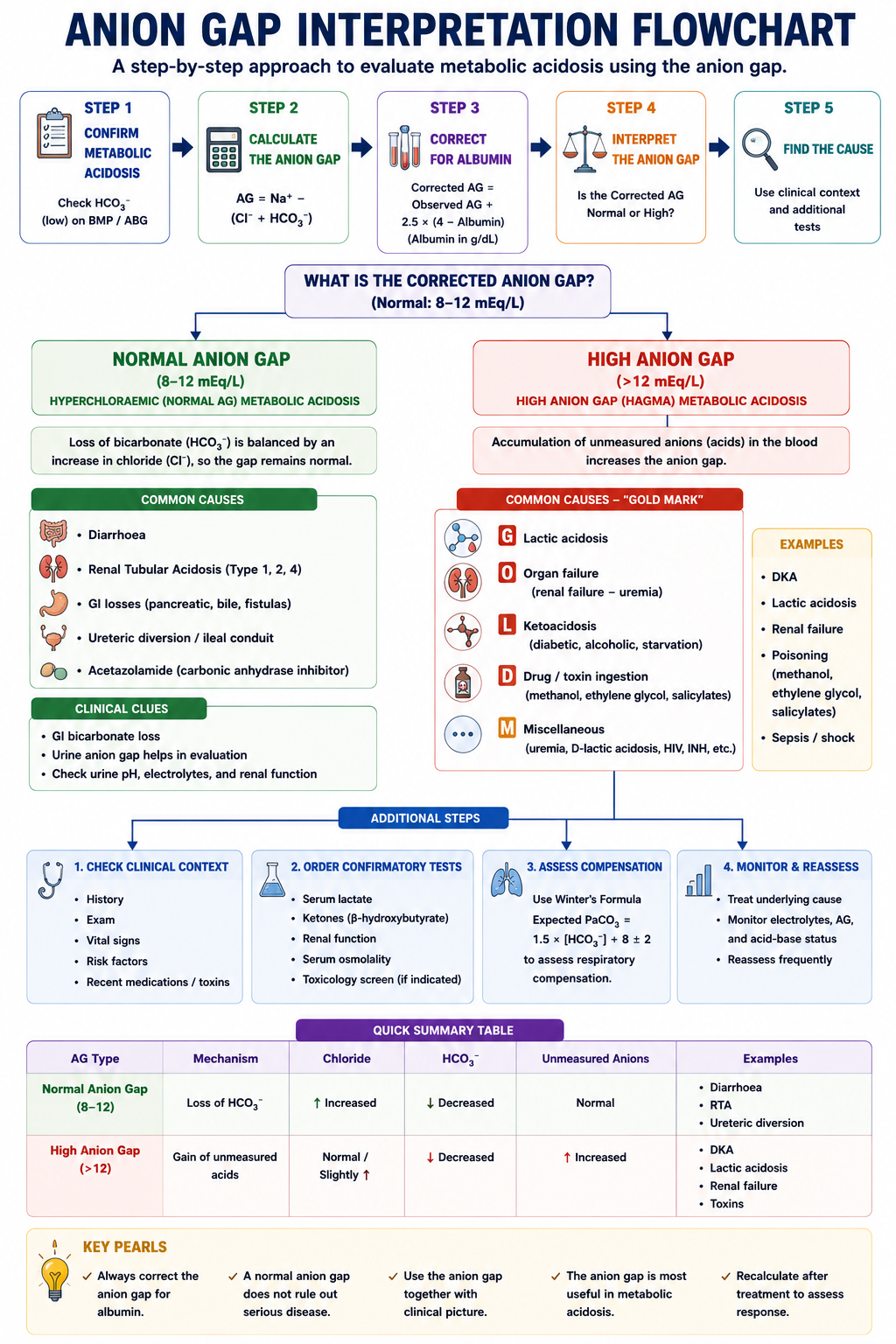
GOLDMARK is a modern mnemonic for common causes of high anion gap metabolic acidosis.
| Letter | Cause |
|---|---|
| G | Glycols |
| O | Oxoproline |
| L | L-lactate |
| D | D-lactate |
| M | Methanol |
| A | Aspirin / salicylates |
| R | Renal failure |
| K | Ketoacidosis |
For a detailed explanation of GOLDMARK causes, link to Metabolic Acidosis Explained.
A high anion gap metabolic acidosis can signal life-threatening conditions such as lactic acidosis, ketoacidosis, renal failure or toxic alcohol ingestion.
Normal Anion Gap Metabolic Acidosis
Normal anion gap metabolic acidosis is also called hyperchloraemic metabolic acidosis. It usually occurs when bicarbonate is lost and chloride rises to maintain electrical neutrality, so the anion gap remains unchanged.
Common causes include:
- Diarrhoea
- Renal tubular acidosis
- Pancreatic losses
- Ureteric diversion
Albumin Correction
Albumin correction is one of the most important clinical concepts in anion gap interpretation. Low albumin lowers the observed anion gap. A patient can have severe high anion gap metabolic acidosis but appear to have a normal or only mildly elevated gap if albumin is low.
A patient with severe sepsis and hypoalbuminaemia may have a normal observed anion gap despite significant lactic acidosis. Always consider albumin correction when albumin is low.
This matters in acutely unwell patients because hypoalbuminaemia is common in sepsis, chronic disease, liver disease, malnutrition and critical illness.
Corrected Anion Gap Formula
Worked Example
| Variable | Value |
|---|---|
| Albumin | 2 g/dL |
| Observed anion gap | 10 mmol/L |
Low Anion Gap
A low anion gap is far less common than a high anion gap, and before searching for an unusual cause, the first step should always be to consider laboratory or sampling error. Repeating the electrolyte measurement is often a reasonable first response to an unexpectedly low result.
| Cause | Mechanism |
|---|---|
| Hypoalbuminaemia | Lower albumin means fewer unmeasured negative charges, so the calculated gap falls. Always correct for albumin before concluding no high-gap process exists. |
| Paraproteins | Some monoclonal proteins, such as in multiple myeloma, carry a positive charge and can lower the gap. A low gap alone is not sufficient to diagnose a plasma-cell disorder. |
| Increased unmeasured cations | Lithium, marked hypermagnesaemia and marked hypercalcaemia are uncommon but recognised causes. |
| Chloride measurement interference | Certain substances can interfere with chloride assays, producing an apparently elevated chloride and a lower calculated gap. |
| Sodium underestimation | Severe hyperlipidaemia, hyperproteinaemia or extreme hypernatraemia may affect sodium measurement depending on the analytical method. |
A low anion gap should prompt confirmation of the result and assessment of albumin before rarer explanations such as paraproteinaemia or lithium toxicity are pursued. Consider the whole clinical picture, including anaemia, renal dysfunction, hypercalcaemia, bone pain and abnormal total protein or globulin levels.
Worked Clinical Examples
Pattern recognition on paper is only useful once it has been applied to realistic clinical scenarios. Each example below follows the same sequence: calculate the anion gap, correct for albumin where relevant, and interpret the result alongside the clinical picture.
Example 1 — Lactic Acidosis in Septic Shock
| Test | Value |
|---|---|
| Sodium | 138 mmol/L |
| Chloride | 102 mmol/L |
| Bicarbonate | 14 mmol/L |
| Lactate | 7 mmol/L |
High anion gap metabolic acidosis. The elevated lactate provides a likely explanation. Assess expected respiratory compensation and treat the underlying shock and infection.
Example 2 — Hidden High Gap With Hypoalbuminaemia
| Test | Value |
|---|---|
| Sodium | 136 mmol/L |
| Chloride | 104 mmol/L |
| Bicarbonate | 21 mmol/L |
| Albumin | 1.6 g/dL |
The uncorrected result looks unremarkable, but the corrected gap reveals an unmeasured-anion process that direct measurement of lactate and ketones should now investigate.
Example 3 — Diarrhoea (Normal Anion Gap)
| Test | Value |
|---|---|
| Sodium | 139 mmol/L |
| Chloride | 113 mmol/L |
| Bicarbonate | 16 mmol/L |
Normal anion gap metabolic acidosis. The elevated chloride supports a hyperchloraemic pattern consistent with gastrointestinal bicarbonate loss.
Example 4 — Diabetic Ketoacidosis
| Test | Value |
|---|---|
| Sodium | 132 mmol/L |
| Chloride | 96 mmol/L |
| Bicarbonate | 8 mmol/L |
High anion gap metabolic acidosis caused by ketoacid accumulation. Assess potassium, glucose, volume status, the precipitating illness and expected respiratory compensation.
Example 5 — Mixed High and Normal Anion Gap Acidosis
A patient with diabetic ketoacidosis also has several days of diarrhoea.
| Test | Value |
|---|---|
| Sodium | 138 mmol/L |
| Chloride | 110 mmol/L |
| Bicarbonate | 10 mmol/L |
The bicarbonate reduction is much greater than the rise in the anion gap, suggesting a high anion gap metabolic acidosis plus a normal anion gap metabolic acidosis — consistent with ketoacidosis combined with diarrhoeal bicarbonate loss. See Delta Ratio Explained for the full method and interpretation ranges.
Example 6 — Respiratory Alkalosis Mimicking Metabolic Acidosis
| Test | Value |
|---|---|
| pH | 7.49 |
| PaCO2 | 26 mmHg |
| Bicarbonate | 19 mmol/L |
| Sodium | 139 mmol/L |
| Chloride | 108 mmol/L |
Bicarbonate is low, but the pH is alkalemic and PaCO2 is low. This is a primary respiratory alkalosis with reduced bicarbonate as compensation, not a primary normal-gap metabolic acidosis. Never diagnose metabolic acidosis from bicarbonate alone — see ABG Interpretation Explained for the full approach.
Example 7 — Low Anion Gap
| Test | Value |
|---|---|
| Sodium | 138 mmol/L |
| Chloride | 108 mmol/L |
| Bicarbonate | 27 mmol/L |
| Albumin | 1.8 g/dL |
Hypoalbuminaemia explains most of the low uncorrected gap. The result should still be interpreted against the local laboratory reference range and overall clinical context.
Clinical Uses
The anion gap is most useful in metabolic acidosis, but it also helps clinicians think about hidden acids, toxins, renal failure and albumin effects.
The anion gap helps:
- Diagnose and classify metabolic acidosis
- Identify hidden acids
- Detect possible toxin ingestion
- Evaluate renal failure
- Assess diabetic ketoacidosis
- Assess lactic acidosis
For calculations, use the Anion Gap Calculator. For broader blood gas interpretation, use the Blood Gas Analyser.

Interpretation Algorithm
A structured approach makes the anion gap more useful and avoids over-interpreting a single number.
- Check bicarbonate. Is HCO3- low, suggesting metabolic acidosis?
- Calculate the anion gap. Use Na+ - (Cl- + HCO3-).
- Correct for albumin. Low albumin can hide an elevated gap.
- Determine normal or high AG. This separates bicarbonate loss from acid accumulation patterns.
- Identify the cause. Use clinical context, lactate, ketones, renal function, medications and toxin history.
If the ABG interpretation is difficult, use the Blood Gas Analyser together with clinical judgement.
- A normal AG does not exclude serious illness.
- Always correct for albumin when albumin is low.
- Always interpret the AG in clinical context.
- Use AG together with ABG findings.
- The AG is most useful in metabolic acidosis.
Common Mistakes
The anion gap is simple to calculate, but easy to misinterpret. These are common mistakes in exams and clinical practice.
- Ignoring albumin: low albumin can make the anion gap falsely low.
- Assuming normal AG means no serious illness: normal anion gap metabolic acidosis can still be clinically important.
- Interpreting AG without the ABG: the anion gap should be interpreted with pH, HCO3- and PaCO2.
- Using values from different samples: sodium, chloride and bicarbonate should ideally come from the same blood sample.
- Forgetting lactate and ketones: these are common causes of high anion gap metabolic acidosis.
- Not correcting for albumin in critically ill patients: hypoalbuminaemia is common in sepsis, liver disease, malnutrition and critical illness.
The anion gap should never be interpreted as an isolated number. Always combine it with albumin, ABG findings, renal function, lactate, ketones and the clinical picture.
One Minute Revision
- The anion gap is Na+ - (Cl- + HCO3-).
- It estimates unmeasured anions.
- A common normal range is about 8-12 mmol/L.
- A high AG suggests accumulation of acids such as lactate, ketones, toxic alcohol metabolites, sulphates or phosphates.
- Albumin is the major contributor to the normal anion gap.
- Always correct for albumin when interpreting the anion gap.
Frequently Asked Questions
This article is intended for medical education only. The anion gap is a clinical interpretation tool and must be used with the full clinical picture, local laboratory ranges, albumin concentration, blood gas findings and senior or specialist input when patients are acutely unwell.