Acid-base disorders are disturbances in the normal balance between acid production, carbon dioxide removal, bicarbonate regulation and hydrogen ion excretion. They are common in emergency medicine, intensive care, renal disease, respiratory disease, endocrine emergencies and sepsis.
This article is a foundation article. It explains the core ideas behind acidosis, alkalosis, respiratory disorders, metabolic disorders and compensation. It deliberately avoids becoming a detailed ABG interpretation guide. Once the physiology is clear, arterial blood gas interpretation becomes much easier and much less mechanical.
An acid-base disorder is a clinical process that tends to lower or raise blood pH by changing carbon dioxide, bicarbonate, hydrogen ion concentration or acid production. The four primary disorders are metabolic acidosis, metabolic alkalosis, respiratory acidosis and respiratory alkalosis.
Learning Objectives
- Explain what pH means and why normal pH is tightly controlled
- Describe how carbon dioxide, bicarbonate, lungs and kidneys regulate acid-base balance
- Differentiate acidosis from acidaemia and alkalosis from alkalaemia
- Identify the four primary acid-base disorders
- Understand the basic principle of physiological compensation
- Use a simple beginner approach to acid-base interpretation
What Is pH?
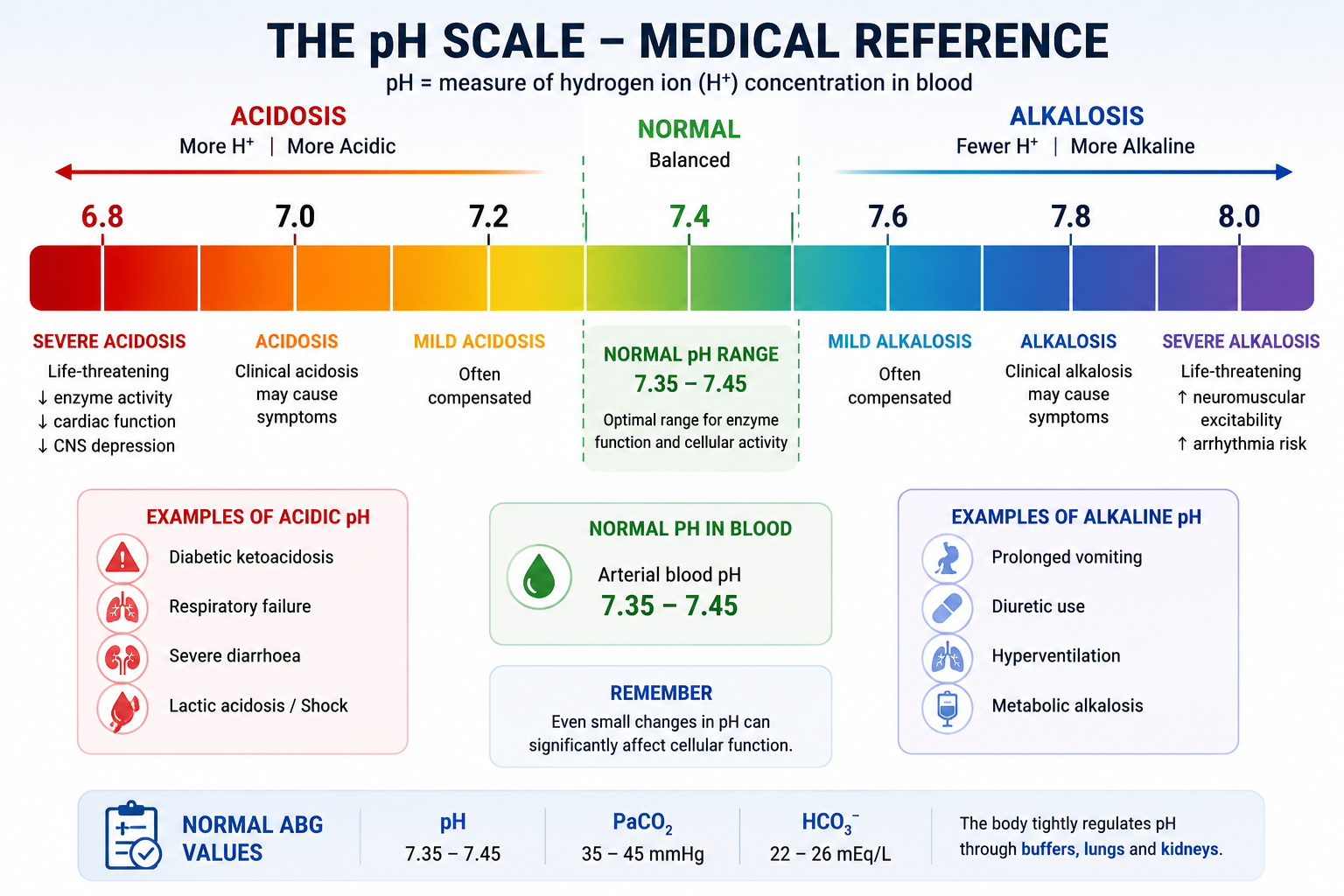
pH is a measure of hydrogen ion concentration. Hydrogen ions are what make a solution acidic. When hydrogen ion concentration rises, pH falls. When hydrogen ion concentration falls, pH rises.
Because pH uses a logarithmic scale, small numerical changes represent large physiological changes. A fall from pH 7.40 to 7.20 is not a minor laboratory curiosity; it reflects a major increase in hydrogen ion concentration and may signal severe illness.
| State | pH value | Meaning |
|---|---|---|
| Normal arterial pH | 7.35-7.45 | Normal acid-base range |
| Acidaemia | < 7.35 | Blood pH is lower than normal |
| Alkalaemia | > 7.45 | Blood pH is higher than normal |
The Core Acid-Base Balance
The most important relationship in acid-base physiology is the balance between bicarbonate and carbon dioxide. Blood pH depends mainly on the ratio between HCO3- and CO2.
If bicarbonate falls or carbon dioxide rises, pH tends to fall. If bicarbonate rises or carbon dioxide falls, pH tends to rise. This simple idea explains why acid-base disorders are divided into metabolic and respiratory disorders.

Normal ABG Values
| Variable | Normal adult arterial value | Main meaning |
|---|---|---|
| pH | 7.35-7.45 | Overall acidity or alkalinity of blood |
| PaCO2 | 35-45 mmHg | Respiratory component; reflects ventilation |
| HCO3- | 22-26 mmol/L | Metabolic component; reflects bicarbonate buffer and renal handling |
Normal Acid-Base Physiology
The body continuously produces acids during normal metabolism. This happens even in healthy people at rest. Every cell uses energy, produces carbon dioxide, metabolises proteins and fats, and generates substances that must be buffered, converted or excreted.
The main acid sources include:
- Carbon dioxide, produced by aerobic metabolism and carried in blood as part of the bicarbonate buffer system
- Lactic acid, produced when anaerobic metabolism increases, such as in shock, seizures or severe hypoxia
- Ketoacids, produced during diabetic ketoacidosis, starvation or alcoholic ketoacidosis
- Sulfuric acid, produced from metabolism of sulfur-containing amino acids
- Phosphoric acid, produced from phosphate-containing compounds
The body must therefore do two things continuously: buffer acids immediately and remove acids from the body. Failure of either process can lead to acidosis or alkalosis.
Acid-base balance is not a static number. It is a dynamic system involving acid production, buffering, ventilation, bicarbonate handling and renal hydrogen ion excretion.
Why pH Must Remain Stable
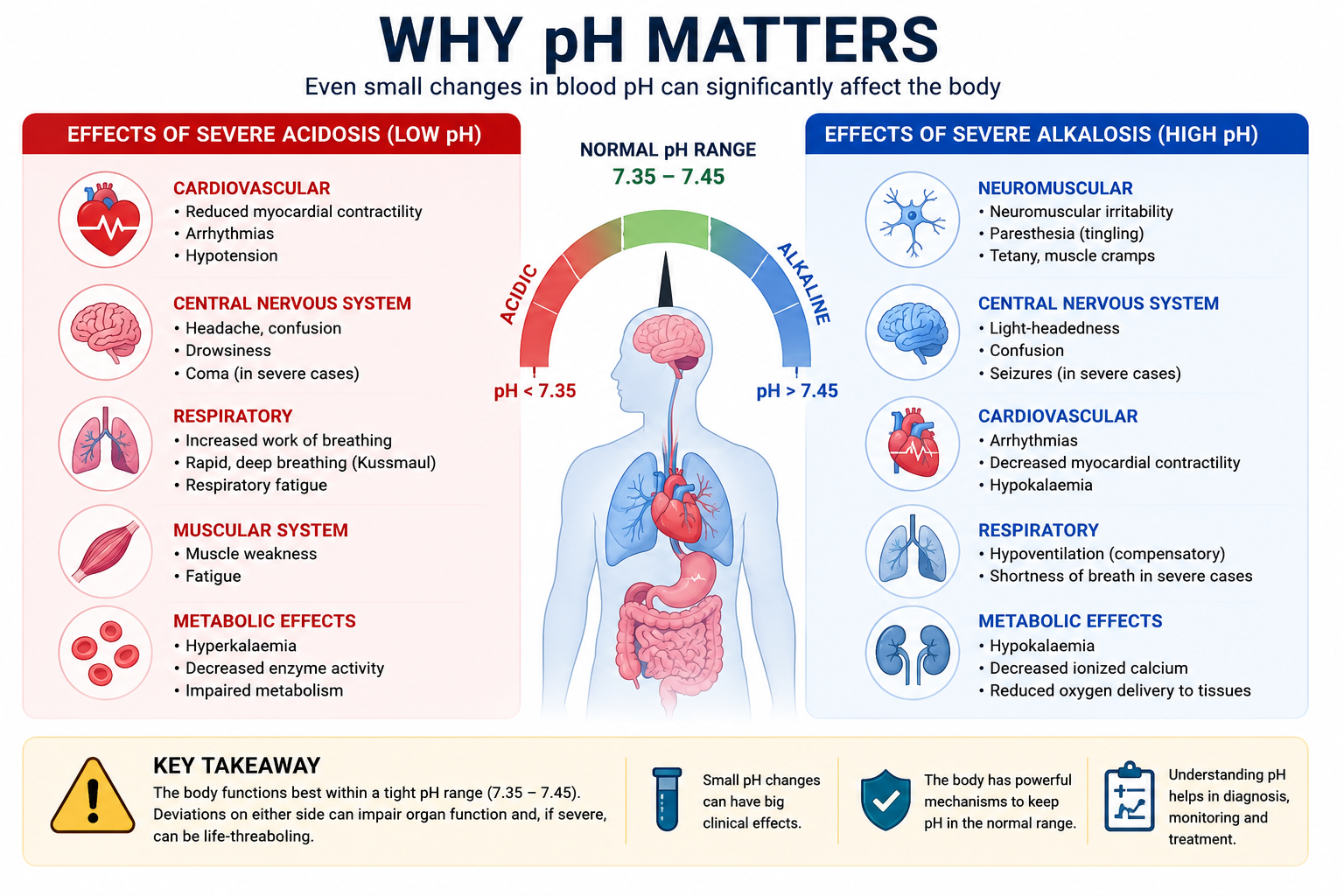
Normal enzyme activity, cellular metabolism, cardiac contractility and neurological function depend on a stable internal environment. When pH moves too far in either direction, proteins change shape, ion channels behave differently, vascular tone changes and cardiac rhythm becomes unstable.
Severe acidosis can cause:
- Reduced myocardial contractility
- Arrhythmias
- Hypotension
- Reduced responsiveness to catecholamines
- Altered consciousness
Severe alkalosis can cause:
- Neuromuscular irritability
- Paraesthesia, cramps and tetany due partly to reduced ionized calcium; see Calcium Homeostasis Explained and Hypocalcemia Explained
- Seizures
- Arrhythmias
- Reduced cerebral blood flow in severe respiratory alkalosis
How The Body Regulates pH
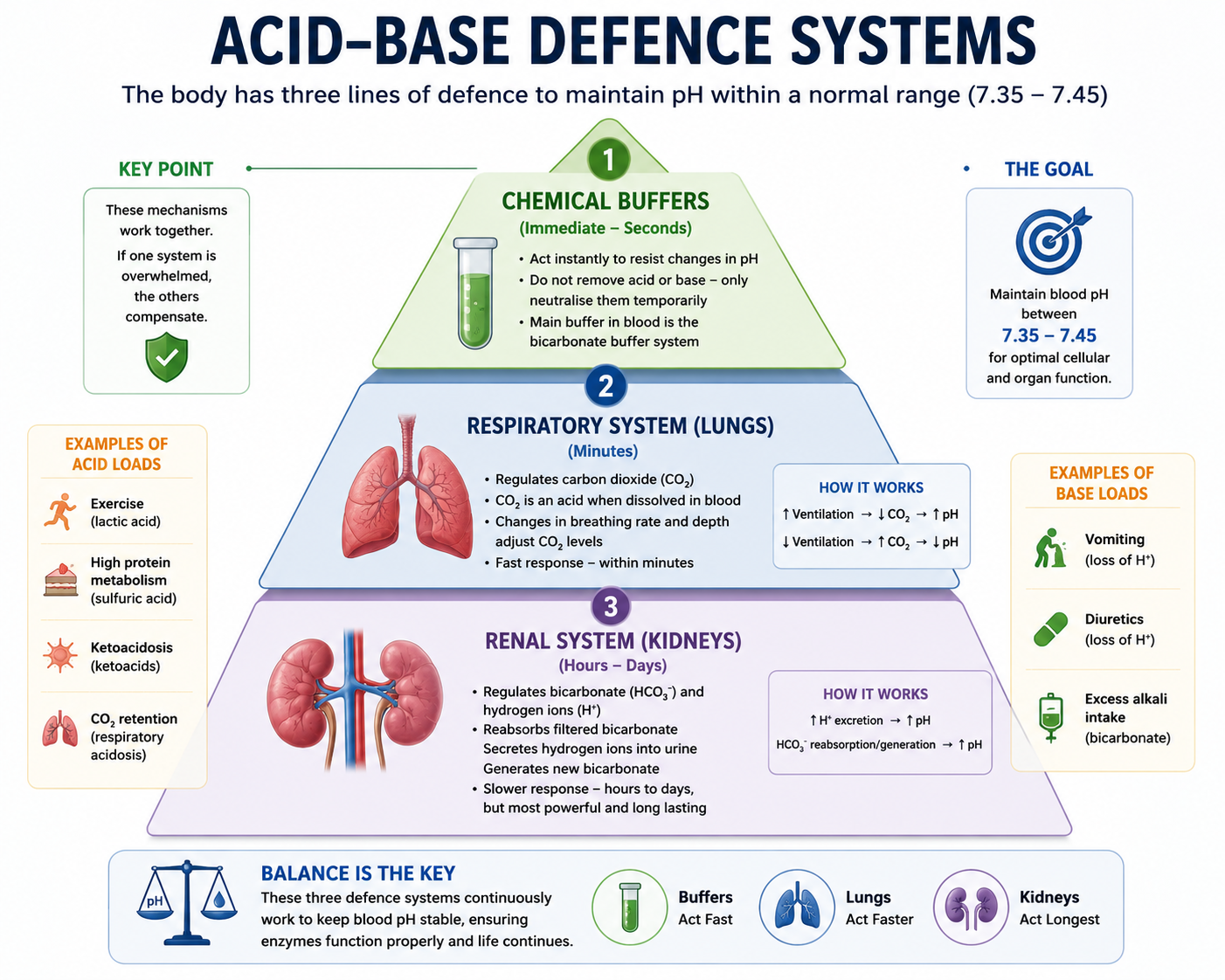
The body defends pH using three major systems. They act at different speeds and in different ways:
| Defence system | Speed | Main role |
|---|---|---|
| Chemical buffers | Immediate | Bind or release hydrogen ions to reduce sudden pH change |
| Lungs | Minutes | Regulate carbon dioxide through ventilation |
| Kidneys | Hours to days | Regulate bicarbonate and hydrogen ion excretion |
Chemical Buffers
Buffers are substances that reduce sudden changes in pH. The most important extracellular buffer system is the bicarbonate buffer system. It links carbon dioxide, water, carbonic acid, hydrogen ions and bicarbonate.
The lungs influence the CO2 side of the equation. The kidneys influence the HCO3- and H+ side. This is why respiratory and metabolic processes are connected rather than separate silos.
Respiratory Regulation
The lungs regulate carbon dioxide. Carbon dioxide behaves as an acid because it combines with water to form carbonic acid, which can dissociate into hydrogen ions and bicarbonate.
If a patient hyperventilates, they blow off CO2 and pH rises. If a patient hypoventilates, they retain CO2 and pH falls. This is the basis of respiratory alkalosis and respiratory acidosis.

Renal Regulation
The kidneys regulate bicarbonate and hydrogen ions. They reabsorb filtered bicarbonate, generate new bicarbonate and excrete hydrogen ions in urine. This makes renal regulation slower than respiratory regulation, but essential for sustained correction.
For example, in chronic respiratory acidosis from long-standing CO2 retention, the kidneys gradually retain more bicarbonate to buffer the extra acid load. This renal compensation is why chronic respiratory acidosis may have a less dramatic pH fall than acute respiratory acidosis.
Acidosis vs Alkalosis
Acidosis is a process that tends to lower pH. Alkalosis is a process that tends to raise pH.
This is different from acidaemia and alkalaemia:
- Acidaemia means the measured blood pH is low: pH below 7.35.
- Alkalaemia means the measured blood pH is high: pH above 7.45.
- Acidosis is the process pushing the pH down.
- Alkalosis is the process pushing the pH up.
This distinction matters because patients can have mixed disorders. A patient may have metabolic acidosis and respiratory alkalosis at the same time. The final pH may be low, normal or high depending on which process is stronger.
A normal pH does not always mean there is no acid-base disorder. Mixed disorders can pull pH in opposite directions and partially mask each other.

Respiratory vs Metabolic Disorders
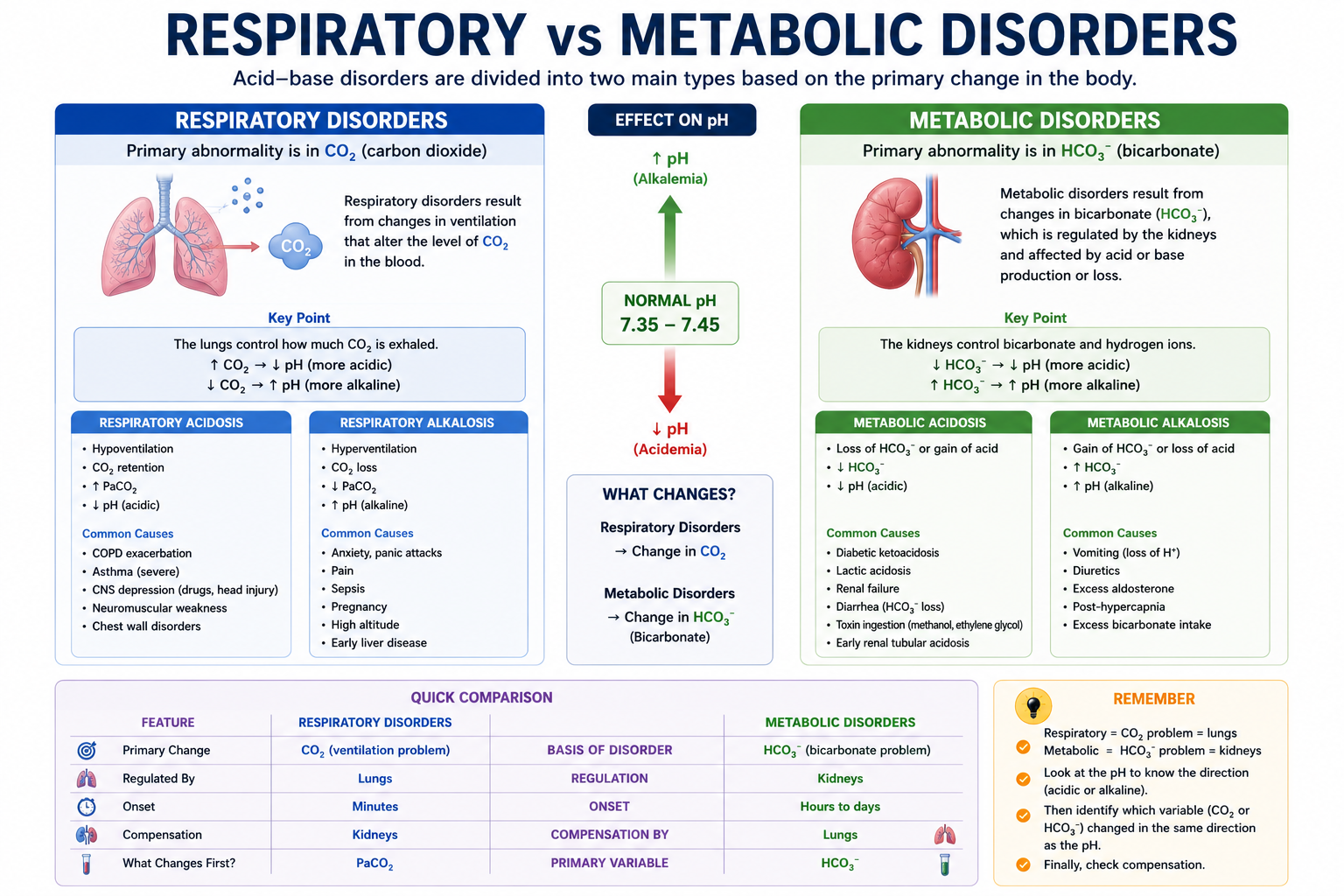
Acid-base disorders are grouped by the primary variable that is abnormal. Respiratory disorders primarily involve carbon dioxide. Metabolic disorders primarily involve bicarbonate or fixed acids.
Respiratory Disorders
In respiratory disorders, the primary abnormality is CO2. If CO2 rises, pH falls and respiratory acidosis develops. If CO2 falls, pH rises and respiratory alkalosis develops.
Metabolic Disorders
In metabolic disorders, the primary abnormality is HCO3- or non-volatile acid load. If bicarbonate falls or acid load rises, metabolic acidosis develops. If bicarbonate rises or hydrogen ions are lost, metabolic alkalosis develops.
| Disorder group | Primary variable | Main organ system | Examples |
|---|---|---|---|
| Respiratory | CO2 | Lungs and ventilation | COPD, opioid overdose, hyperventilation |
| Metabolic | HCO3- or fixed acid | Kidneys, metabolism, gastrointestinal tract | DKA, lactic acidosis, vomiting, diarrhoea |
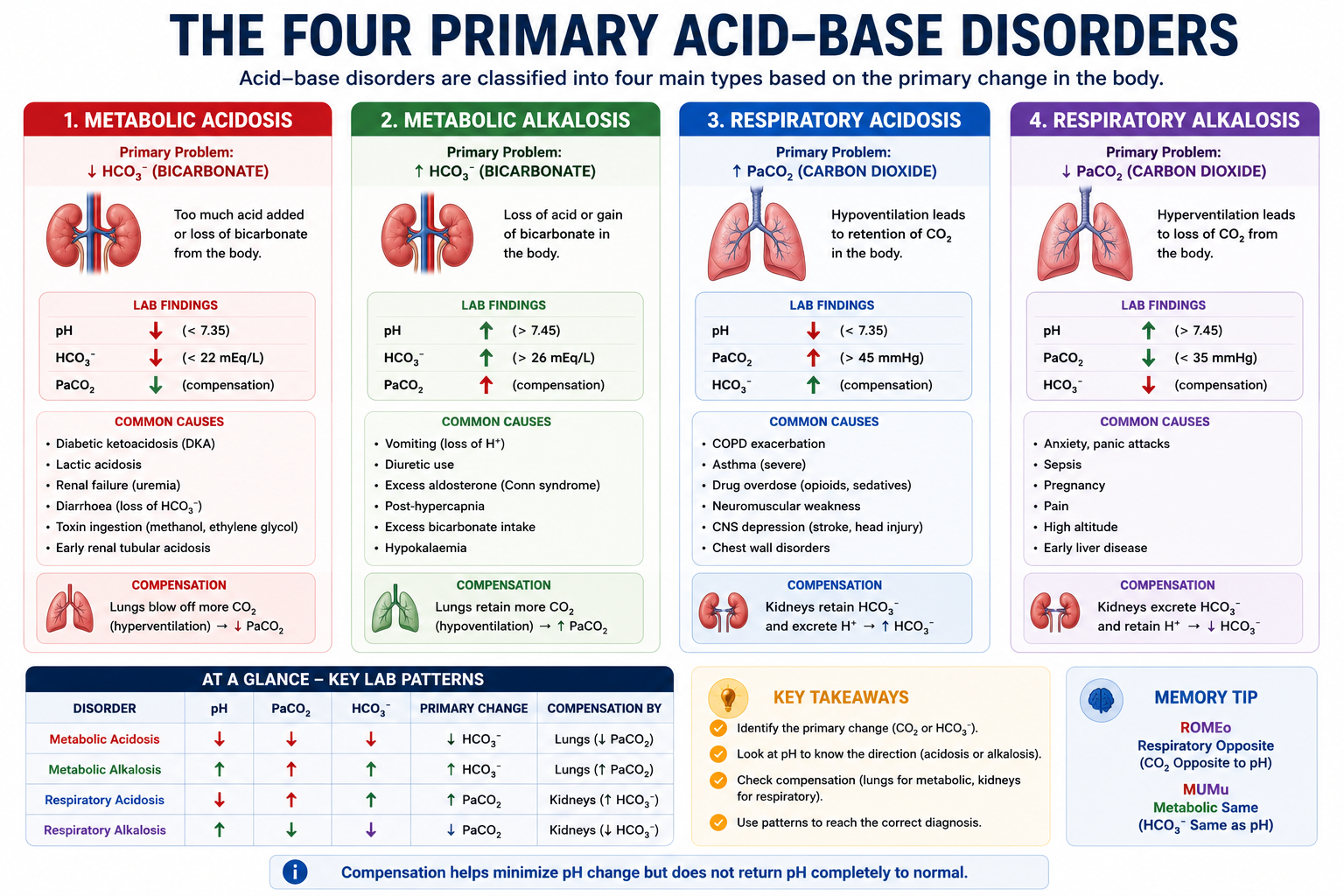
The Four Primary Acid-Base Disorders
Most beginner acid-base interpretation starts with the four primary disorders. Each disorder has a direction of pH change and a primary variable responsible for that change.
| Primary disorder | Primary abnormality | Expected pH direction | Common causes |
|---|---|---|---|
| Metabolic acidosis | Low HCO3- or increased fixed acid | Low pH | DKA, lactic acidosis, renal failure, diarrhoea |
| Metabolic alkalosis | High HCO3- or hydrogen ion loss | High pH | Vomiting, diuretics, mineralocorticoid excess |
| Respiratory acidosis | High CO2 | Low pH | COPD, drug overdose, neuromuscular weakness |
| Respiratory alkalosis | Low CO2 | High pH | Anxiety, sepsis, pregnancy, pain, hypoxaemia |
Metabolic Acidosis
Metabolic acidosis occurs when bicarbonate is reduced or fixed acid load is increased. The pH falls because the metabolic component of the buffer system is pushing toward acidity.
Common causes include diabetic ketoacidosis, lactic acidosis, renal failure and diarrhoea. The lungs compensate by increasing ventilation to lower CO2.
Metabolic Alkalosis
Metabolic alkalosis occurs when bicarbonate is increased or hydrogen ions are lost. Vomiting is a classic cause because gastric acid is lost from the body. Diuretics can also contribute by causing volume contraction, chloride loss and potassium abnormalities.
Respiratory Acidosis
Respiratory acidosis occurs when ventilation is inadequate and CO2 is retained. The pH falls because CO2 acts as an acid in the bicarbonate buffer system. Acute respiratory acidosis can be dangerous because the kidneys have not yet had time to compensate.
Respiratory Alkalosis
Respiratory alkalosis occurs when ventilation is excessive relative to CO2 production. CO2 falls, so pH rises. It may occur with anxiety, pain, sepsis, pregnancy, liver failure, salicylate poisoning or hypoxaemia-driven hyperventilation.
High-Yield Acid-Base Pattern Table
| Disorder | pH | PaCO2 | HCO3- | Primary problem |
|---|---|---|---|---|
| Metabolic acidosis | Down | Down | Down | Low bicarbonate or increased fixed acid |
| Metabolic alkalosis | Up | Up | Up | High bicarbonate or hydrogen ion loss |
| Respiratory acidosis | Down | Up | Up | Carbon dioxide retention |
| Respiratory alkalosis | Up | Down | Down | Excessive carbon dioxide loss |
ROME means Respiratory Opposite, Metabolic Equal. In respiratory disorders, pH and PaCO2 move in opposite directions. In metabolic disorders, pH and HCO3- move in the same direction.
Physiological Compensation
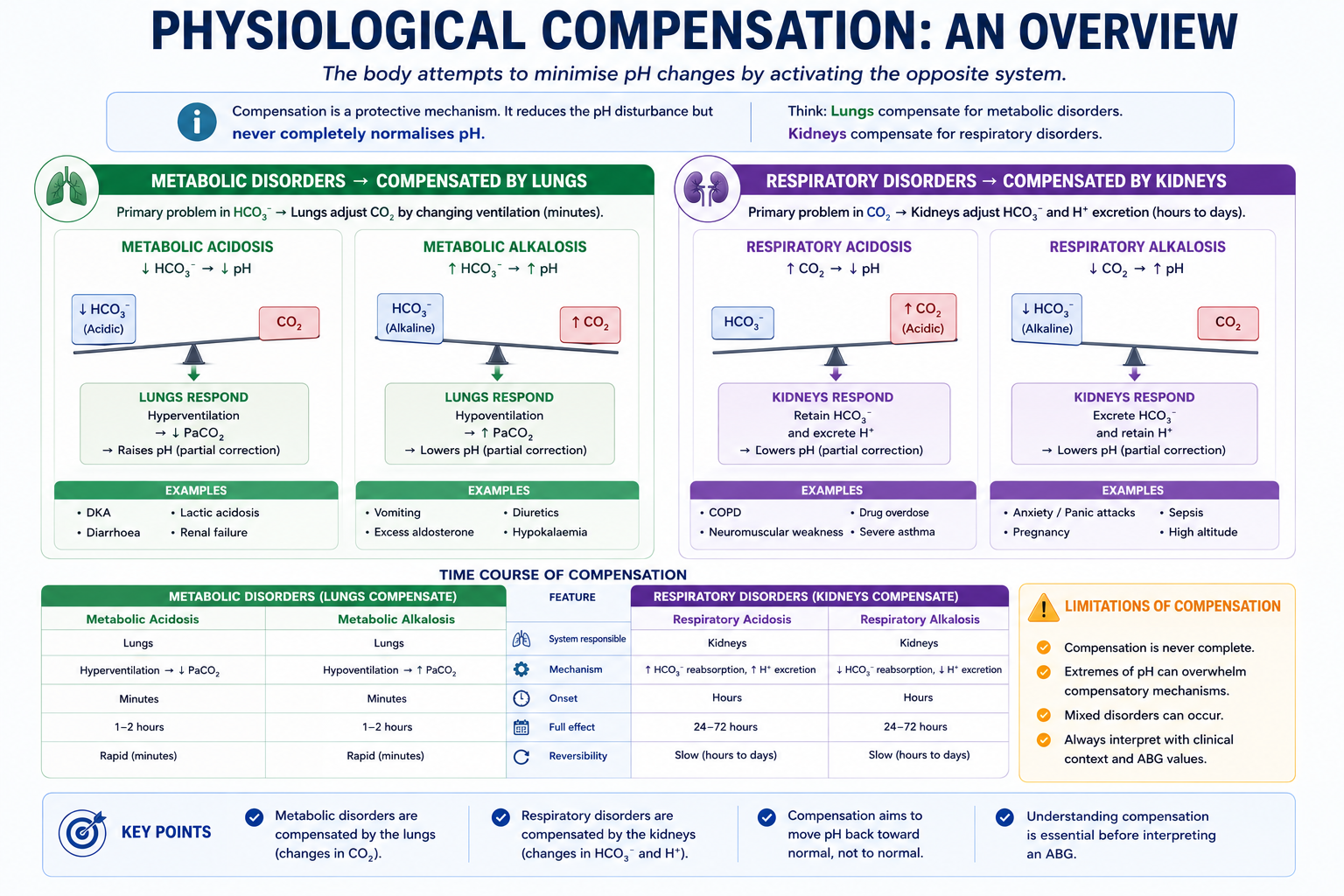
Compensation is the body's attempt to minimise a change in pH. It does not fix the underlying disorder. It only reduces the severity of the pH disturbance while the primary problem continues.
A key principle is that compensation moves in the same direction as the primary abnormality:
- In metabolic acidosis, HCO3- is low. The lungs compensate by lowering CO2 through hyperventilation.
- In metabolic alkalosis, HCO3- is high. The lungs may compensate by retaining CO2 through reduced ventilation, although this is limited by the need to maintain oxygenation.
- In respiratory acidosis, CO2 is high. The kidneys compensate by retaining or generating more bicarbonate.
- In respiratory alkalosis, CO2 is low. The kidneys compensate by excreting more bicarbonate.
Physiological compensation usually does not completely normalise pH. If the pH is completely normal, consider either a mild disorder, a chronic compensated disorder or a mixed acid-base disorder.
Compensation should be appropriate, but it should not overshoot. If the compensatory change appears excessive, suspect a second acid-base disorder rather than calling it simple compensation.
| Primary disorder | Compensating system | Compensatory response |
|---|---|---|
| Metabolic acidosis | Lungs | Increase ventilation, lower CO2 |
| Metabolic alkalosis | Lungs | Reduce ventilation, raise CO2 |
| Respiratory acidosis | Kidneys | Retain/generate HCO3- and excrete H+ |
| Respiratory alkalosis | Kidneys | Excrete HCO3- |
Simple Approach To Acid-Base Interpretation
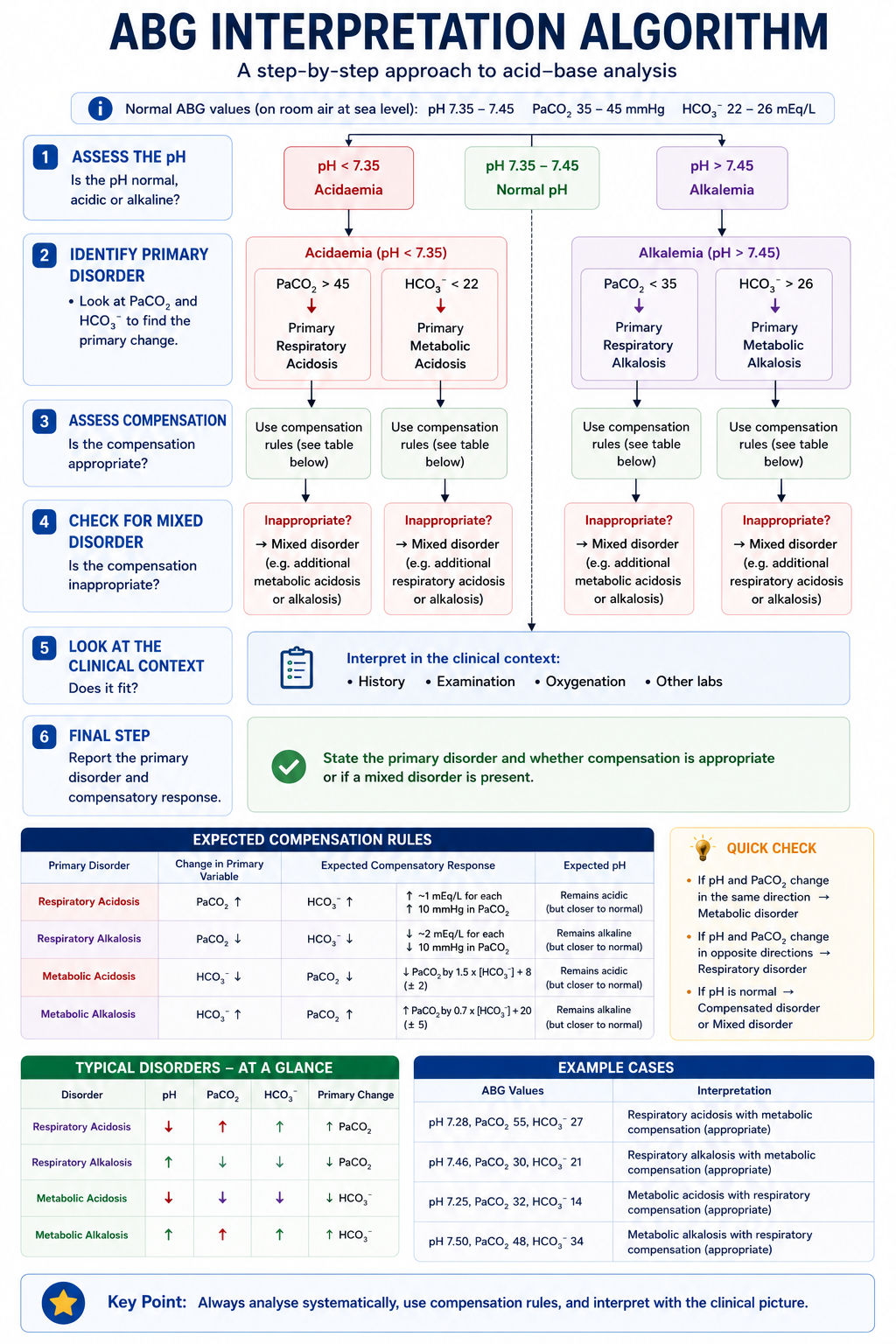
A beginner should approach acid-base interpretation in a consistent order. The goal is not to memorise every formula immediately, but to build a reliable mental map.
- Check pH. Is there acidaemia, alkalaemia or a near-normal pH?
- Check CO2. Is CO2 moving in a direction that explains the pH?
- Check HCO3-. Is bicarbonate moving in a direction that explains the pH?
- Identify the primary disorder. Decide whether the primary abnormality is respiratory or metabolic.
- Assess compensation. Ask whether the other system is responding appropriately.
For example, if pH is low and HCO3- is low, the primary process is likely metabolic acidosis. If pH is low and CO2 is high, the primary process is likely respiratory acidosis. This simple pattern recognition is the foundation of ABG interpretation.
More detailed interpretation requires expected compensation formulas, anion gap assessment, delta ratio and clinical context. Those topics belong in a dedicated ABG interpretation article.
Use the Blood Gas Analyser for structured ABG/VBG interpretation and the Anion Gap Calculator when assessing metabolic acidosis.
Clinical Examples
Clinical context is essential. The same pH abnormality may have different causes depending on the patient, history, examination and laboratory findings.
| Example | Typical pattern | Primary disorder | Why it happens |
|---|---|---|---|
| Diabetic ketoacidosis | pH down, HCO3- down | Metabolic acidosis | Ketoacid accumulation consumes bicarbonate |
| COPD exacerbation | pH down, CO2 up | Respiratory acidosis | Inadequate ventilation causes CO2 retention |
| Vomiting | pH up, HCO3- up | Metabolic alkalosis | Loss of gastric acid and chloride promotes alkalosis |
| Panic attack | pH up, CO2 down | Respiratory alkalosis | Hyperventilation removes excessive CO2 |
These examples are deliberately simple. Real patients may have mixed disorders. A septic patient may have lactic acidosis and respiratory alkalosis at the same time. A patient with COPD may have chronic respiratory acidosis plus metabolic alkalosis from diuretics. Always interpret the blood gas with the clinical picture.
One Minute Revision
- Acid-base disorders result from abnormalities in carbon dioxide or bicarbonate regulation.
- The four primary disorders are metabolic acidosis, metabolic alkalosis, respiratory acidosis and respiratory alkalosis.
- The lungs regulate carbon dioxide through ventilation.
- The kidneys regulate bicarbonate and hydrogen ion excretion.
- Compensation helps minimise pH changes but does not completely correct the underlying disorder.
- Understanding these principles forms the foundation of arterial blood gas interpretation.
Frequently Asked Questions
This article is intended for medical education only. It is designed for medical students, intern doctors and junior doctors and does not constitute clinical advice. Acid-base disorders can indicate life-threatening illness and should be interpreted using the full clinical context, local protocols and senior or specialist input.